
Garic: The Racak narrative has been revived due to the expected verdict against Thaci and other KLA commanders
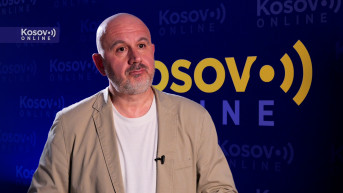
Journalist Milos Garic told Kosovo Online that the narrative about the alleged genocide against Albanians in Kosovo has been actively promoted ever since Hashim Thaci and other KLA commanders were transferred to The Hague at the end of 2020, and that the issue has been intensified and brought back into focus in recent days, likely because verdicts are expected in July for Thaci and the other KLA commanders currently on trial in The Hague.
Garic points out that from the moment the former KLA leaders were transferred to The Hague, Albin Kurti came to power in Pristina and almost simultaneously launched initiatives related to investigations into the alleged genocide against Albanians, as well as investigations that Kosovo courts should conduct into alleged Serbian crimes.
"The Racak case occupies an important place in that context. All of this should also be viewed within a broader framework. The story of Racak and the narrative built around that event has been ongoing for 27 years. The bombing of Serbia and the subsequent process of separating Kosovo from Serbia's constitutional and legal order were based on it. There are two completely different interpretations of the events of that period. On one side there is the Albanian narrative, and on the other the Serbian one. The Albanian side, with the support of the most influential Western countries, presents the events of January 1999 as proof of its own suffering, while portraying the Serbian side as solely responsible. The bombing of the Federal Republic of Yugoslavia, the NATO intervention, and all the events that followed came on the wave of that narrative. It is a narrative that still exists today and is based on the claim that Albanians were exclusively victims and Serbs exclusively perpetrators," Garic said.
He stresses that this is precisely why there is still insistence on maintaining such a narrative today, despite the many questions that have been raised about the events of that period.
"The trial in The Hague did not happen by accident. During the proceedings, a large amount of evidence was presented regarding the actions of the KLA during 1998 and 1999, as well as crimes committed against civilians. By reopening the Racak issue and placing it back in the spotlight, there is an attempt to preserve the narrative that dominated international public opinion for years. In doing so, many of the controversies surrounding the case are often overlooked, including the role of the OSCE Verification Mission led by William Walker. As a result, one may get the impression that part of the Western public, together with political structures in Pristina, is still trying to preserve the same narrative despite the many facts that have emerged over the years," Garic emphasized.
He also notes that a particular concern is the existence, according to unofficial information, of a large number of sealed indictments against Serbs for alleged war crimes.
"Such indictments leave room for various abuses and create a sense of legal uncertainty among Serbs. This applies not only to Serbs living in Kosovo and Metohija, but also to those living in central Serbia or other countries in the region. As a result, there are concerns that individuals could become the subject of investigations or arrests based on charges they do not even know exist. At the same time, critics of the authorities in Pristina believe that judicial and police institutions are also being used for political purposes, which further deepens mistrust among Serbs. In that sense, the message being sent to Serbs is that there is a certain degree of uncertainty and apprehension when traveling to Kosovo and Metohija. Because of this, such actions are viewed by part of the Serbian public as pressure on the Serbian community and as an attempt to further worsen its position. If this practice continues, it will become increasingly difficult to build trust and create conditions for the normalization of relations, dialogue, and lasting agreements between Belgrade and Pristina," Garic concluded.


0 comments