
Gecaj: Various interest groups use Islam for their long-term goals in the Western Balkans
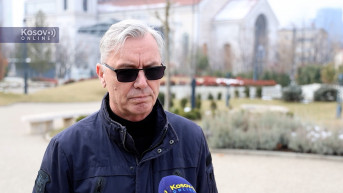
Security expert and retired Colonel Hysen Gecaj assessed that many interest spheres, including various intelligence agencies, use Islam to achieve their long-term goals in the Western Balkans.
“This is publicly called radical Islam, but I think more parties are involved. It is easier for them to hide behind an organization that is spiritually connected to people, and it is easier to influence them that way. It would be more accurate to say that these are interest spheres of various people, countries, and intelligence agencies using Islam to achieve their long-term goals in this part of the Balkans,” Gecaj told Kosovo Online.
He emphasizes that radical Islam is present in Kosovo, Bosnia and Herzegovina, North Macedonia, and Sandzak.
“I wouldn’t exclude Albania either, but the situation there is a bit different because the influence is not as strong as in the other regions,” this expert specifies.
He believes that the situation is changing, especially in Kosovo, but warns that the most vulnerable to radical Islam are the younger generations.
“The people have become more aware. They noticed that there is something else behind it, it is not just religion, there is something more to it, so the majority Albanian population, which is Muslim-oriented, has distanced itself in a way. However, there is a group of people, especially the youth, who don’t understand what’s going on and think they are doing something honorable. They are the biggest victims because they fall under the influence of these interest groups camouflaged in Islam,” Gecaj explains.
The result, as he points out, is the large number of young people from Kosovo who joined the Islamists in fighting in Syria and the Middle East.
“We still have a small number now, which is not so significant, but it still shows that this influence remains present and that state authorities must be cautious to prevent it from happening as it did in the past,” Gecaj emphasizes.
He sees the fact that human rights must be guaranteed to all these people as a serious obstacle in detecting radical Islamists.
“The state is trying to protect the human rights of these people, they have the right to believe in God, to practice their religion, but this makes it more difficult to uncover who stands behind it and how it is carried out,” Gecaj explains.


0 comments