
Gerxhaliu: Condition for using funds from the Growth Plan for the Western Balkans is a bitter pill for Kosovo
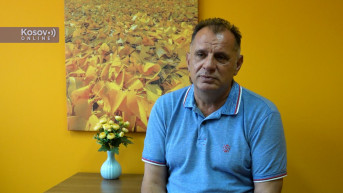
Economic expert Safet Gerxhaliu says that the EU, through the Development Fund, has shown readiness to assist the economic development of the Western Balkan countries, but that the region, with its backward steps, is missing the opportunity to utilize these funds. Gerxhaliu believes that the condition imposed on Kosovo, which requires the Growth Plan to be conditioned by dialogue with Serbia, is a bitter pill.
Gerxhaliu points out that in the Balkans, it is impossible to talk about economic problems without political connotations, and that this is the biggest issue.
"The fact that everything is politicized is a bad image for the Western Balkans. The truth is that political stability has no alternative, and it can come through dialogue supported by the EU and the US," Gerxhaliu said.
According to him, the time has come for politicians in the Western Balkans to learn two words: sacrifice and compromise, because the EU has shown through many projects that it is ready to help the region.
"Now is the right time for a compromise solution, because the common denominator for solving problems in the Western Balkans is the normalization between Kosovo and Serbia. The EU and donors have done a lot to support the Western Balkans and individual countries with various projects and their financing. In this context, we must pay more attention to the EU. We know that until 2030, an amount of 30 billion euros has been allocated to support the Western Balkans, whether through economic development, normalization, or digitalization of this region. From 2023 to 2027, six billion euros have been set aside for the support of the Western Balkans. It must be understood that democracy has no alternative, it is the right mechanism to gain that support. The governments in Kosovo and Serbia know this very well. I think it is time to achieve results, not to be hostages of political disagreements when it comes to using those funds.
It is time for politicians to look at the people, not power and political parties. The sooner this is realized, the better the prospects for the Western Balkans," Gerxhaliu said.
Gerxhaliu cited the agreement between North Macedonia and Greece as a good example, from which, as he points out, both countries have benefited.
"We don't need to discover hot water, but just to learn from such examples. There is no benefit from the sterile dialogue that has been conducted in recent years. I fear that the Balkans take one step forward, three steps back, and that does not favor the future and integration. It is a missed opportunity to use all the funds and resources allocated for the economic revival of the Western Balkans, as preparation for entering the EU," he says.
According to him, the sanctions imposed by the EU on Kosovo and the conditions for using the funds from the Development Fund are a bitter pill for Kosovo.
"The mere fact that Kosovo is under EU sanctions 25 years after the war is a complicating circumstance that we must analyze through several dimensions. Because of these sanctions, normal dialogue with EU countries and Brussels itself is lost, many projects are frozen, and when we add the bypassed circumstance of using the Development Fund's resources, it is a bitter pill for Kosovo. It is time to go to Brussels, to talk, and to agree on a solution, not always to agree that we disagree," Gerxhaliu believes.
He adds that the EU has clearly stated that both Kosovo and Serbia will be affected by the measures if they do not meet the conditions, but the question arises whether it is always necessary for the big powers to exert pressure to solve problems in the Western Balkans or whether the countries can come to an agreement on their own.
"The EU is clear; it has indicated several times that both Kosovo and Serbia will be affected, if not directly, then indirectly by measures. This is soft pressure on the governments of Kosovo and Serbia, but we must ask the question: does it always have to come from external pressure from some powers or the EU, or can we not find a solution ourselves? It is time to look to the future, because the more we produce politics, the more we strengthen the past, and the future is far more important than the past," Gerxhaliu concluded.



0 comments