
Gogic: A broad right-wing front, with Osmani included, could threaten the Self-Determination
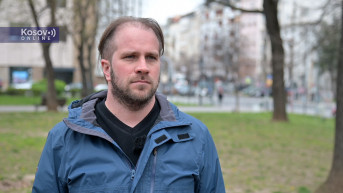
Political scientist Ognjen Gogic assessed that uniting the right wing in Kosovo could threaten the dominant position of the Self-Determination Movement, but that this idea by the leader of the Democratic League of Kosovo, Lumir Abdixhiku, depends on the balance of power among opposition parties and the potential return of Vjosa Osmani to party politics.
Gogic first points out that the concept of the right wing has a different connotation in Kosovo compared to political life in Serbia.
“While in Serbia the right wing refers to parties that are nationalist, sovereigntist, perhaps even anti-Western, in Kosovo it has a different meaning. It primarily refers to parties that are currently in opposition – the Democratic League of Kosovo (LDK), the Democratic Party of Kosovo (PDK), and the Alliance for the Future of Kosovo (AAK). They identify as center-right parties, in contrast to the current ruling party, Self-Determination, which is a left-wing party. In the Kosovo sense, the right wing actually means parties that are pro-Western, as opposed to the current government,” he said.
Speaking about Abdixhiku’s initiative, Gogic says its core goal is political opposition to Prime Minister Albin Kurti.
“Abdixhiku avoids saying that this would be a front against Kurti, but that is essentially what it is. He wants it to sound ideological, as a unification of parties that are pro-Western and that would not create problems in relations with the West as Kurti has done,” he stated.
Regarding the feasibility of such unification, Gogic points to relations among the parties.
“LDK sees itself as the central party, but the question is whether the PDK, which currently stands stronger, would accept being part of a broader front led by LDK,” he said.
He sees a special role in the potential political engagement of Vjosa Osmani.
“Abdixhiku relies on the idea that Osmani would return to party politics, as her presidential mandate is nearing its end. It does not seem realistic that she would return to her party Guxo, but there is speculation that she could re-emerge as part of LDK. Abdixhiku is likely hoping that her return would be a unifying factor for the entire opposition against Kurti. This is being considered in the context of the expected parliamentary elections in Kosovo. Regardless of the decision of the Constitutional Court of Kosovo, it seems that Kosovo will head to elections,” Gogic assessed.
Speaking about the potential electoral impact of such a bloc, Gogic believes it could be significant.
“If a broad coalition of these parties were formed and if Osmani joined them, it would be a strong pre-election bloc that could threaten Self-Determination’s election result. Even the Democratic League of Kosovo alone, strengthened by Vjosa Osmani, could reach into Self-Determination’s electorate and weaken its support, as many of Kurti’s voters resent that he did not nominate Osmani for re-election,” he said.
When it comes to political discourse, Gogic believes the focus would be on relations with the West.
“That bloc would not initially speak much about relations with Serbia and the dialogue. That would be secondary. The main rhetoric would concern Kosovo’s pro-Western orientation – that Kosovo should move toward the European Union and improve relations with the United States. A significant advantage would be that Osmani brought Kosovo into the Peace Committee and that she has, evidently, received support from Donald Trump,” the analyst said.
He added that it is too early to say how such a bloc would approach the dialogue if it came to power.
“They will certainly criticize Kurti’s moves in the dialogue. The opposition has also criticized the new concessions related to the implementation of the Law on Foreigners. They will always take a stance of criticizing whatever happens in the dialogue and look for Kurti’s weak points, but if they were to take power, they would likely be more cooperative,” he said.
He emphasizes that the key difference would be in the approach to international partners.
“That bloc would be clearly oriented toward the European Union and the United States and would not risk damaging relations with Europe and America over the dialogue or relations with Serbs in Kosovo or with Serbia, as happened during Kurti’s rule, so that bloc would likely be more constructive,” Gogic concluded.


0 comments