
Gogic: The citizenship law accommodates Albanians in the diaspora who have become foreigners in Kosovo
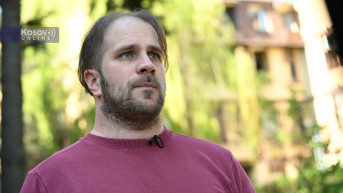
Political scientist Ognjen Gogic told Kosovo Online that the announcement of a new Law on Citizenship in Kosovo should be viewed in the context of the Law on Foreigners, which recently began to be implemented, as it treats even ethnic Albanians as foreigners if they do not have Kosovo documents. He added that introducing this law into the procedure is also a continuation of courting the diaspora, which is believed to be favorable toward Self-Determination.
Gogic explains that Albanians originally from Kosovo who moved to another country, most often in Western Europe, had to renounce Kosovo citizenship in order to obtain citizenship of the country they moved to.
“Those Albanians, when they come to Kosovo, are not citizens of Kosovo and the Law on Foreigners applies to them. They must also register their stay after three days or apply for a residence permit if their stay is longer than legally prescribed. So this law primarily accommodates them, as has been announced. It has been publicly stated that the adoption of this new law is meant to simplify the procedure for reacquiring Kosovo citizenship and that it is primarily intended for those Albanians and, more generally, for citizens of Kosovo who have renounced their citizenship,” Gogic said.
As he notes, the amendments to the law were announced as early as December, ahead of parliamentary elections, but at that time the Assembly of Kosovo could not adopt it because it had been dissolved, while the government that intended to propose the law was in a technical mandate.
He added that April is now being used as a period in which it is certain that the Assembly of Kosovo can function.
“This is, of course, absolutely connected with the elections that are expected and is generally another effort to appeal to the diaspora, which is a very important support base for Self-Determination and Kurti. In this way, some Albanians living in the diaspora will potentially be able to regain Kosovo citizenship through a simpler and faster procedure, thereby gaining voting rights, and it is assumed that they will then vote for Self-Determination in upcoming elections. Not only them, but their entire families will likely be satisfied as well, and they may reward that in future elections. This is a continuation of courting the Albanian diaspora by Self-Determination, because the Albanian diaspora is believed to favor the party and is even credited with contributing to its historic victory last December,” Gogic emphasized.
According to him, the new Law on Citizenship will lead to an increase in the share of Albanians, in ethnic terms, within the total number of Kosovo citizens, but it will not necessarily change the demographic structure within Kosovo itself.
“This is because these are people who live outside Kosovo and will likely not return. The number of citizens in the registry will increase, primarily among Albanians, although not only Albanians are affected. Gorani, Bosniaks and other communities that have left Kosovo in large numbers and acquired citizenship in other countries are also in this situation, and some of them may wish to regain Kosovo citizenship,” Gogic pointed out.
He also emphasized that the specific legal changes, at least in the aspects known to the public, do not directly concern the Serbian community. Serbs who left Kosovo, if they moved to Western European countries, generally did so using Serbian documents and therefore were not forced to renounce Kosovo citizenship, if they had it at all.
In theory, he added, the law could potentially allow some Serbs to reacquire Kosovo documents if they had renounced them.
According to him, Serbs are unlikely to pay much attention to this law.
“It does not directly concern them, except that they will, of course, be aware that this could potentially increase the share of the Albanian population in Kosovo. However, changes in Kosovo’s demographic structure do not generally affect the constitutional and legal guarantees for non-majority communities. These guarantees are established by the Constitution and laws regardless of population percentages. So even if the number of Serbs in Kosovo decreases, it will not call into question their guaranteed rights, but the position of all non-majority communities, including Serbs, becomes less favorable as they become more marginalized and fewer in number within the overall population,” Gogic concluded.



0 comments