
Gogic: It is unlikely that the Kosovo issue will be resolved in the next three months; Lajcak's mandate expires in April
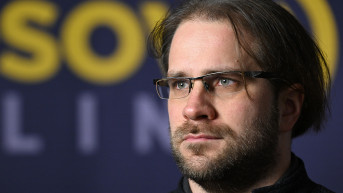
At the beginning of this year, many officials indicated that the European Union would intensify pressure regarding the Belgrade-Pristina dialogue process. However, political analyst Ognjen Gogic states that considering the upcoming elections in the EU and the United States, the Union is unlikely to have the mechanisms to exert such pressure.
Reminding that the EU Special Envoy for the dialogue, Miroslav Lajcak, was appointed to this position in 2020, and his mandate expires in April, Gogic says for Kosovo Online that it is unlikely to achieve any success in the normalization process in four months when it has not happened in the last four years.
Gogic says that given the upcoming elections in the European Union and the United States, it is unlikely that the EU currently has the mechanisms to exert such pressure.
Gogic recalls that in September 2022, a Franco-German plan was presented to Belgrade and Pristina, supported by both the EU and the United States. The idea was to implement this initiative during 2023.
As he says, last year was designated as the year when significant progress was supposed to happen, a breakthrough in the normalization process between Belgrade and Pristina.
"That initiative was conceived to achieve an agreement at the beginning of last year and then implement it before the end of the year. In the agreement accepted in February, later supplemented in Ohrid in March, it was stated that it would be implemented within 150 days, followed by a donor conference. None of that materialized, and the EU and the US envisioned finishing this job during 2023 or making significant progress because they knew there would be no one to deal with it in 2024", Gogic emphasized.
He emphasizes that the question now is who can exert that pressure.
He points out that it should be kept in mind that Miroslav Lajcak's mandate as the main mediator for the EU expires in April.
"His mandate has already been extended several times; he was appointed to this position in 2020 with the task of bringing the dialogue process to an agreement on normalization. Four years later, it seems that we are not any closer to that agreement, and some previous agreements have collapsed in the meantime. So, it is indeed unlikely that if progress could not be made in four years, it would be achieved in the last three months of his mandate. It is a big question whether his mandate will be extended because it is again a question of who can extend it since the EU is going to parliamentary elections", Gogic states.
He adds that after the EU elections, a new composition of the European Parliament and the European Commission will be formed, and currently, these bodies do not have the capacity to embark on new initiatives.
Considering all this, as Gogic says, it seems unlikely that the EU has mechanisms to exert pressure on the parties.
Gogic also points out that it should be taken into account that Serbia currently has a caretaker government, and while Serbia completes the process of forming a new government, Kosovo will likely enter the process of parliamentary elections.
"In fact, this year, at no point, will we meet halfway, that is, we will not have mediators on both sides, negotiators who will have the legitimacy to discuss agreements. When all this is taken into account, it seems that attempts to impose a solution in the next three months are unlikely", he says.
Gogic believes that the EU will now seek some exit strategy, a way to round off the story somehow so as not to declare failure and avoid a collapse.
Referring to the narrative that the EU will formalize agreements by the end of January and introduce them into negotiating documents for both Serbia and Kosovo, Gogic says that this has been misinterpreted in public, and it is not a new form of pressure, but an internal matter, a bureaucratic job - for the EU to incorporate those documents into its own.
"In a way, it's putting things in a drawer. It's not a new approach; it's actually putting that matter on hold for the time being. In this way, the EU would leave it in trust for a new session of the European Parliament to deal with", he adds.
Gogic expects that in the next few months, efforts will be made to find an exit strategy, and that, at some point when conditions are met, Belgrade and Pristina will somehow confirm their commitment to continuing the process.
"But not more than that because it cannot be a miracle that changes so many things overnight. We have agreements that have not been accepted properly or implemented, and achieving an unprecedented result and miracle in a few months is unlikely. It is more about rounding off the story so that the EU does not enter the election process by declaring failure in this process", he notes.
Commenting on statements from the EU regarding the removal of stickers for license plates, in the context of expected pressures, Gogic says that they precisely show that the EU is grasping at straws and wants to see any progress to declare it an unprecedented success.
"There are comments that the removal of these stickers demonstrates the will of both sides to return to the dialogue process, although it is a minor concession that does not indicate a desire to make any serious progress, such as holding elections in northern Kosovo or even forming the Community of Serb-majority Municipalities. This shows that the EU needs any progress, and they are even willing to latch onto the smallest thing to show some result", Gogic says.
According to his words, if Belgrade and Pristina demonstrate goodwill on minor issues in the coming period, it will be enough for the EU to conclude this story in March when the European Council summit is expected.
"Minimal concessions are needed from both sides for the EU to acknowledge some progress at the European Council and then round off and conclude this story for the time being. However, this actually means that the whole thing will only be paused in light of these alleged moves, and only when elections are held in both the EU and the US, and when we have administrations in both the EU and the US with full capacity, can the process continue, and that is not expected before next year", Gogic concludes.


0 comments