
Hoxha: EU expects clear progress in dialogue by March; economic conditioning possible
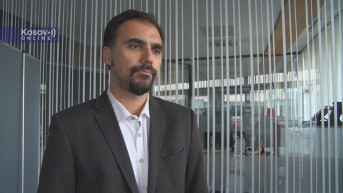
Journalist Leart Hoxha stated that the European Union, aiming to reach an agreement between Pristina and Belgrade, might exert pressure on Kosovo only in financial terms in the early months of this year, considering the lack of deeper relations between the EU and Kosovo.
Hoxha told Kosovo Online that the EU had repeatedly stated that there must be progress in the dialogue in the first quarter of this year.
"It is expected that around the anniversary of the Agreement in Brussels, or the Ohrid Annex, something will be signed, sealed, that there will be some more concrete progress on both sides," Hoxha stated.
As he emphasized, elections in Serbia and Kosovo cannot postpone the implementation of the agreement, even though both sides hope for that, and this is the official stance of the United States.
"If this is not President Vucic's post-election tactic to delay the process of forming the government and thus postpone the dialogue, buying time for himself and the Serbian side with all these maneuvers, then it somewhat coincides with some statements in Kosovo. For example, Lutfi Haziri, the deputy chairman of the Democratic League of Kosovo, explicitly said that he expected things to be settled in the first 90 days of this year. At the same time, we have a very clear message from O'Brien from the State Department, who said before the elections in Serbia that whatever the election result, he expected Serbia to adhere to what it had accepted or what had been agreed upon. I think that the American stance that neither side can escape obligations despite elections means that, at best, they are trying to buy time, but progress toward what has been agreed upon is inevitable," Hoxha added.
As he noted, regarding pressure, the EU mostly uses economic measures, which are currently in force, to pressure Kosovo regarding the dialogue with Serbia and the implementation of agreements reached.
"In Pristina, nothing more significant is expected, as punitive measures, not sanctions, but punitive measures, as the EU calls them, are still in force against Kosovo. And I think that will cost the Kosovo government and all Kosovo citizens hundreds of millions of euros. The European Union mostly employs economic measures to pressure Kosovo because the stance towards Kosovo is neutral, there are no other relations between Kosovo and the EU since there has been no start to accession negotiations, and Kosovo's membership request submitted in December 2022 is still not accepted. Except for keeping punitive measures against Kosovo in force, it is hard to believe that the EU will do anything more about it," Hoxha said.
Regarding EU pressure on Serbia, Hoxha states that if Serbia's involvement in the events in Banjska is proven, it could open the door to harsh sanctions.
"I think that if something is published proving that the state of Serbia was directly involved in the terrorist attack in Banjska, then it would open the door to sanctions or other measures against Serbia. For now, this exists in a report from the Ministry of Foreign Affairs of Kosovo, and it is also in some media reports, but it does not officially exist in Brussels. For example, if something like that is published or adopted as a document within the European Parliament by February or March, then it would open the door to greater pressure on Serbia, not only as a state that sponsors terrorism but also as a destabilizing factor in the Balkans," Hoxha concluded.

0 comments