
Gogic: Kosovo is paying the price for Kurti's unilateral moves

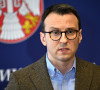
Political scientist Ognjen Gogic has stated that Kosovo is currently paying the price for Albin Kurti’s unilateral moves, as there is no will in Brussels to lift the sanctions on Pristina due to such policies, even though the original reasons for imposing those measures have, in the meantime, lost their relevance.
"There is indeed a disconnect between Brussels’ expectations and the reality on the ground. It seems that many in Brussels generally disapprove of Kurti’s policies, not only regarding the situation in the north but also overall, because of the unilateral measures he has taken. And now, the price is being paid. The government and Kosovo are paying that price. There is no will to lift those measures, even though they may no longer make sense. In fact, it’s the lack of consensus among European countries that is the reason for not lifting them, and it’s also a kind of inertia that exists in Brussels and in relations between Brussels and Pristina," Gogic told Kosovo Online.
He recalls that the EU imposed measures on Pristina two years ago and called on it to take steps to de-escalate tensions in the north.
"This specifically meant new elections in northern municipalities and the withdrawal of special police forces. Two years later, none of that has been done, but those things have lost their relevance. The situation and reality in Kosovo have changed, not necessarily for the better, but those demands may no longer be relevant given the changes on the ground," Gogic clarified.
During a recent visit to Brussels, Albin Kurti requested that the European Commission lift the punitive measures and stated that Kosovo should receive the questionnaire and candidate country status.
Gogic explains that despite the Self-Determination Movement’s narrative that the EU is unfair to Kosovo, its citizens remain pro-European.
Still, he emphasizes, that is not enough for EU integration.
"The impression is that Kosovo is very pro-European, that its citizens, primarily Albanians, are very committed to the idea of integration into Euro-Atlantic structures, EU and NATO membership. Many of them go to work there, their families are there. They are indeed committed to EU membership, although under the influence of the Self-Determination Movement's narrative, they believe that the European Union is unfair toward Kosovo and doesn’t treat it in a fair manner," Gogic says.
He points out that when it comes to EU membership, Kosovo faces an insurmountable obstacle: the lack of consensus on its recognition within the EU.
"Kosovo has signed a Stabilization and Association Agreement, and that’s the last step it could take on the path toward European integration without opening the question of status and statehood. For candidacy, which would be the next step, there needs to be consensus, all EU member states must agree that Kosovo can be a candidate for membership, and according to EU regulations, only a state can be a candidate. So, as long as those five EU countries do not recognize Kosovo as an independent state, they will not vote for it to receive candidate status. Furthermore, that doesn’t even mean that other countries which do recognize Kosovo would vote for its candidacy, because they have objections to Kosovo’s policies," Gogic emphasizes.
That, he says, is also the key reason why this issue is not on the EU’s agenda in Brussels.
"The outcome of such a vote is well known. Those five countries would veto it, and they would likely be joined by others that do not accept Kosovo’s policies and believe it does not meet the conditions to be a candidate," Gogic explained.


0 comments