
Gogic: Kurti has betrayed his promises to young people, instead of turning to other parties they are turning to abstention
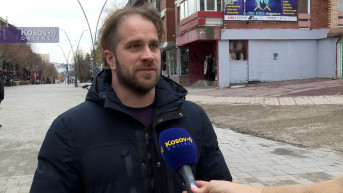
Political scientist Ognjen Gogic stated that the caretaker Prime Minister Albin Kurti did not fulfill the promises he gave to young people in the previous election campaign, which is why his support among that age group has declined. He pointed out that young people have not turned to another political party, but to abstention, because, as he assesses, they are more interested in leaving Kosovo than in politics.
Gogic noted that Kosovo is a young society and pointed out that since the previous elections a new group of voters has come of age, between 25,000 and 30,000 of them, which, as he says, is a very important contingent of votes that parties count on.
"One of the reasons why Kurti once became so dominant in the political life of Kosovo was that he addressed young voters better than anyone else, first in 2019 and then in 2021. In that generational shift, research was conducted that showed that young voters actually decided those elections and that a large percentage of them voted primarily for Self-Determination, because it was believed that this was the party bringing change and something new compared to the traditional parties that emerged in the 1990s, formed out of the KLA, and which were believed to be keeping Kosovo stuck where it was, bearing great responsibility for corruption and for the high level of institutional capture, which prevented young people from finding employment," Gogic said.
Kurti’s messages at the time, our interlocutor adds, were that he would unblock institutions, that he would fight corruption and eradicate it, which would give young people a chance to get jobs.
"Those promises were not fully fulfilled, so by 2025 support for Kurti among young people had declined, but young voters did not turn to other parties, they turned to abstention. Thus, in 2025, lower participation of young people in the elections was recorded," he said.
Gogic added that what young people are primarily concerned with is work, and the labor market cannot absorb them. He says that there are not enough opportunities for young people in Kosovo, and the only way out they see is to vote for those parties which they believe can create new opportunities by primarily fighting corruption.
"For young people, the biggest concern is how to leave Kosovo, and that is what interests young people in Kosovo from all communities, not only Albanian, but also Serbian, and the trend of departures among young people from the Gorani and Bosniak communities is also present, so this is a trend that affects all communities in Kosovo. The point is that the visa liberalization that entered into force in 2024 made it even easier for young people to leave Kosovo, and they are leaving more often for short periods, for up to three months, working sometimes legally, sometimes less legally, but also looking for opportunities to find permanent employment there," the political scientist said.
He notes that young people are much more interested in leaving Kosovo than in politics, and that one should expect that in the upcoming elections young people will not participate to a large extent, because they do not see that the current political situation can be resolved in a way that meets their needs and addresses their problems.
"The institutional crisis seems to have demotivated all voters in Kosovo, which can be seen from the fact that turnout during the local elections in October was lower than during the parliamentary elections in February, and then even lower in November during the second round of local elections. A downward trend in voter turnout is evident, but it could be said that it is most pronounced among young people, meaning that parties have perhaps succeeded in keeping their traditional voters, but have not managed to attract young people who are not as invested in politics, and will likely be even less able to count on young people's interest in the upcoming parliamentary elections," Gogic concluded.



0 comments