
Gogic: Kurti talks about "basic agreement" to keep alive the idea of recognition based on the model of two Germanies
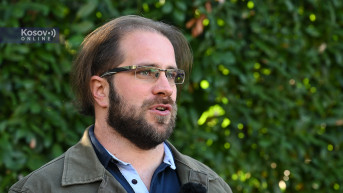
Political analyst Ognjen Gogic tells Kosovo Online that Kosovo Prime Minister Albin Kurti often uses the term "basic agreement," rigidly adhering to the latest agreed plan for resolving the Kosovo issue and that he does so in order to keep alive the idea of mutual recognition based on the model of two Germanies.
"The Franco-German proposal was designed by analogy with the Basic Agreement signed by two Germanies in the 1970s, effectively or implicitly recognizing each other without de jure official recognition. After this de facto recognition, both became UN members. The proponents of this idea of the Franco-German proposal actually want to achieve the same goal – for Serbia and Kosovo to accept an agreement that would allow them to become EU members at some point. The agreement would also send a message that Serbia and Kosovo are de facto recognized, if not de jure," Gogic says.
He points out that the Franco-German proposal was initially called the Basic Agreement.
"That term was used. In the meantime, it has been renamed and is called the Agreement on the Path to Normalization. I think it was renamed because of Serbia's demand; Serbia did not want to accept any agreement that referred to the agreement between the two Germanies. What Kurti is trying to do by using the phrase 'basic agreement' is to allude to and refer to an agreement modeled after the two Germanies. He wants to keep that idea alive that Serbia and Kosovo should mutually recognize each other de facto in the same way and regulate their relations," Gogic says.
According to him, Kurti uses the term "basic agreement" all the time because he has certain expectations and plans.
"Kurti constantly refers to this agreement and wants it to be signed in the hope that it will send a message to everyone in the international community that Kosovo and Serbia, if not de jure, have at least de facto recognized each other. And then non-recognizing countries, especially in the EU and NATO, would also change their position in that context. This is an attempt, a bluff on his part, but it doesn't work because Serbia not only refuses to accept it but also because this agreement in international documents is not called the 'Basic Agreement,' but the 'Agreement on the Path to Normalization.' However, it's no longer clear how all these numerous agreements are named. This one is also known as the Brussels-Ohrid Agreement, so there's a general confusion," Gogic notes.
Regarding the Community of Serb Municipalities, our interviewee says that it is an obligation Kosovo took on through the 2013 agreement, confirmed in 2015, and in a new agreement earlier this year. However, despite all these agreements, there are no indications that Kosovo has started working on its formation.
"After the meetings in the previous period, it's even less likely that Kosovo will enter that process because Serbia has taken the position that whether Kosovo forms the CSM or not, Serbia will not de facto recognize Kosovo. Serbia's position is not: if Kosovo forms the CSM, we will then accept de facto Kosovo's independence. Instead, the topic of de facto recognition of Kosovo and its membership in international organizations is not up for discussion at all. This is not an option for Serbia, regardless of whether Kosovo forms the CSM or not," he emphasizes.
Gogic adds that for this reason, Kosovo, which is otherwise against the CSM, has absolutely no motivation to enter the process of forming it.
"Kosovo, which is against the Community, has no motivation to enter the process and spend the trump card kept for that final moment of mutual recognition or acceptance of the so-called basic agreement. Since Serbia's position is very clear, especially after the EU's request, Kosovo has no reason, from the perspective of its interests, to start the process of forming the CSM," Gogic concludes.


0 comments