
Gogic: Pristina wants all Serbs in Kosovo to have Kosovo documents
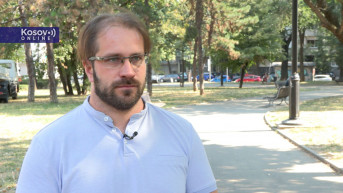
Pristina wants all Serbs in Kosovo to have exclusively Kosovo documents and to eliminate those issued by the Serbian Police departments that have been relocated from Kosovo, political scientist Ognjen Gogic says to Kosovo Online, regarding the deadline set by the Kosovo Ministry of Internal Affairs for the replacement of Serbian driver's licenses with Kosovan ones, which expires on August 23.
Gogic, however, emphasizes that this measure by Pristina also represents a kind of compromise and concession because Pristina had long demanded that Serbs retake driving tests to obtain Kosovo driver's licenses, whereas now this is possible without retaking the tests. He adds that the obligation to replace licenses only applies to those documents that Serbia issued for cities in Kosovo and that if the police in Kosovo see Pec, Pristina, Djakovica, Kosovska Mitrovica, etc., on the license, they will not recognize those Serbian documents.
"This is actually a package because the transition from, for example, KM to RKS plates was supposed to go in parallel with the replacement of driver's licenses issued by the Police Department for Kosovska Mitrovica. One of the reasons why Serbs refused to change their plates or couldn't switch to RKS plates was that they didn't know how they would drive with those plates and Serbian-issued driver's licenses that the Kosovo Police did not recognize. This is, in a way, 'forcing' people into the Kosovo system, but it is also a way to make it easier for citizens to resolve the situation more simply," Gogic believes.
He adds that the Kosovo Police have already announced that they will consider these licenses illegal if they are not replaced and that those drivers will likely be taken off the road if they are caught driving vehicles with RKS plates and Serbian-issued driver's licenses for cities in Kosovo. However, he believes that there probably won't be many such cases because citizens who drive with RKS plates likely needed to replace their driver's licenses.
Nevertheless, he notes that this does not solve all the problems because there are still some Serbs who want to keep their Serbian driver's licenses because they drive certain vehicles in central Serbia and will probably be among those who haven't replaced these licenses.
"The next problem is that some Serbs in Kosovo, who have valid Kosovo documents, have registered residences in central Serbia, in Belgrade, Kragujevac, Kraljevo, Raska, etc., and they have driver's licenses issued for those cities in central Serbia. These driver's licenses have not been considered illegal in Kosovo, and the Kosovo Police haven't had issues with them, but there is a problem if a person has, for example, a Belgrade driver's license but drives with RKS plates. And the third problem is that some citizens transferred their vehicles to relatives in central Serbia during the uncertain and unpredictable process of re-registering to RKS plates, and they are now driving vehicles based on authorization. These citizens probably have, for example, KM driver's licenses but drive vehicles with Belgrade plates based on authorization, and at some point, the problem will likely be not just the KM driver's license but also the authorization," Gogic concludes.



0 comments