
Velebit: Serbia's image has changed in Washington, it is up to Belgrade to turn that into cooperation
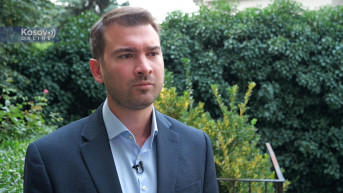
Relations between Serbia and the United States have seen positive developments in recent years, while the strategic dialogue is opening space for more concrete cooperation, said Vuk Velebit, president of the Pupin Initiative. He claims that Washington sees Serbia as an important country in the Western Balkans, while Belgrade has an opportunity to strengthen cooperation in areas such as energy, security, technology and artificial intelligence. He believes that Serbia should take advantage of the change in relations, as well as the potential for cooperation with individual US states such as Ohio, RTS reported.
Vuk Velebit, one of the founders and president of the Pupin Initiative, said that the US administration's approach to Serbia has changed significantly recently and that Washington sees Belgrade as an important place for strengthening relations in the Western Balkans. He also cited the strategic dialogue established by Serbia and the United States this summer as confirmation of this change.
Velebit said that Serbia is being presented as one of the European countries with which the United States wants to strengthen relations.
“Serbia is being presented as one of the countries in Europe with which America wants to strengthen relations, and I think there has been a maturation of thinking within the US administration that Serbia is, I would say, the most important country for America in the Western Balkans region, because of its size, population and the size of its economy,” Velebit told RTS.
Speaking about Washington's message that it wants to be Serbia's partner in choosing its international partners, Velebit said that US President Donald Trump's administration has a different approach to international relations compared with some previous US presidents. He believes that this approach aligns with Serbia's interests in areas where additional cooperation is needed.
“If we know that America will continue to be one of the key factors in our region, and if Serbia, for its own sake, wants to do more on energy diversification, strengthening security and defense, innovation and technology – in that sense, America also presents itself as a natural ally for Serbia,” Velebit said.
He singled out energy, security and artificial intelligence as the main areas for cooperation, which have also been identified within the Serbia-US strategic dialogue. At the same time, he pointed out that the relationship with Serbia is not a matter of just one US political party.
“The strategic dialogue was announced as early as during the administration of President Joe Biden, when Ambassador Christopher Hill was in Belgrade, so in that sense we see continuity between Democrats and Republicans when it comes to strengthening relations with Serbia,” he said.
Velebit said there are different views of Serbia in the United States, which he considers normal for the American political system.
“In the US Congress today, you have people who are more critical of Serbia, but you also have those who are more cordial and speak more favorably about relations with Serbia. But I would say that today in Washington, more is being said about Serbia than was previously the case, both among Republicans and Democrats,” Velebit said.
According to him, more positive messages about Serbia are now also coming from the highest levels of the US administration, which he sees as an indication of a change in Washington's perception of Serbia. Among the officials sending such messages, he singled out Trump, Secretary of State Marco Rubio and Deputy Secretary of State Christopher Landau.
“That tells you that there are people at the top of the administration who are seriously dealing with Serbia and that, in that sense, the perception of Serbia has changed,” the president of the Pupin Initiative said.
Velebit believes that it is now primarily up to Serbia to take advantage of the positive foundation that has been created and turn the strategic dialogue into concrete projects.
“They will give you a chance, but you need to take advantage of that chance, and I think it is more up to us to make use of both the strategic dialogue and this positive change that is taking place. That means seeing what concrete things we can work on with the Americans and also being aware that, of course, when you work with the Americans, it comes at a price,” Velebit said.
Speaking about how Serbia can change its image in the United States, Velebit singled out cooperation with the state of Ohio as a particularly important example.
“Ohio and Serbia are actually quite similar, and I think there is great potential both for economic cooperation and for further strengthening people-to-people ties,” Velebit said.
According to him, good ties with one US state can help Serbia become more visible in Washington, where different countries compete for the attention of the same people. For that reason, he sees cooperation with Ohio as one of the opportunities to further strengthen Serbia's position in the United States.
Velebit said that the name of Mihajlo Pupin itself is still not sufficiently well known in the United States, especially compared with Nikola Tesla, but that the Pupin Initiative is working to raise awareness of his legacy. At the same time, he sees the initiative's work as part of a broader process of changing perceptions of Serbia and Serbian-American relations.
“Over these three years of our work, I would also like to think that we have made a certain contribution to this new, changed perception of Serbia within the US administration, as well as to a changed perception of Serbian-American relations in Serbia,” Velebit said.
He said that during a recent visit to Washington he spoke with representatives of the US administration and recognized in those conversations a willingness to build relations with Serbia. According to him, this approach is not limited to individual meetings, but was something he heard in several conversations.
“There is genuinely a desire on their part to work with Serbia on building relations based on the future, and you will hear that at every turn in Washington,” Velebit concluded.
Announcing the topic of the upcoming Pupin Initiative conference in Belgrade, Velebit said he sees the Danube as an important opportunity for positioning Serbia and strengthening cooperation with countries in the region.
“The Danube is extremely important because of energy, traffic and transport, and security, and I think that in this context Serbia has a far greater potential to make use of this river,” the president of the Pupin Initiative said.
In his assessment, better use of the Danube's potential could contribute to Serbia's broader positioning in the eastern part of Europe. The Pupin Initiative sees this topic as one of the areas through which it can contribute to discussions about Serbia's place in the region.
0 comments