
Gouillon: The only fascist project that has existed since World War II is "Greater Albania"
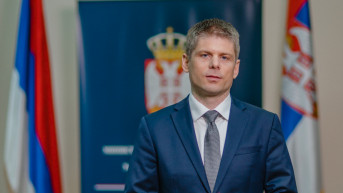
The irony was that anyone who opposed the project of "Greater Albania" and who helped the Serbs, even if he was not a Serb, was called a fascist, said the director of the Directorate for Diaspora and Serbs in the Region in the Government of Serbia, Arnaud Gouillon, in an interview for "Vecernje Novosti".
Thanks to the work of the director of the Directorate for Diaspora and the Serbs in the region, Arnaud Gouillon, and his humanitarian organization "Solidarity for Kosovo", today it is possible to read an objective article about the situation in Kosovo in foreign media, which was unthinkable 15 years ago.
"We report on the situation, we organize visits for foreign journalists and parliamentarians so that the world can see how the Serbs live in the center of Europe. Serbia is on the side of truth and justice, the situation is a little better than before, but negative propaganda is still present, the pro-Albanian lobby is strong ", Gouillon said, who was banned from entering Kosovo almost five years ago, and for four years he has been on trial, related to that, before the Kosovo courts.
"What I know both as a Frenchman and as a Serb is that Kosovo is at the core of the history, culture, and identity of the Serbs," Gouillon said and added that "while Kosovo is in the heart of each of us, it is ours, regardless to the current or future political reality".
Reacting to accusations from Twitter where he was called a Serbian fascist, Gouillon replied that "Serbs and fascists do not belong in the same sentence".
"The Serbs have always fought against fascism, and the only fascist project that has existed since World War II is the Greater Albania project. The irony is that anyone who opposes that project and helps the Serbs, even if he is not a Serb, is called a fascist. It shows the face of those extremists who only know how to label and draw targets on their foreheads," Gouillon said.
Commenting on the position of the Serbs in the countries of the region where they have been present since ancient times, he said that it differed from country to country, that it was not the same to be a Serb in Ljubljana and Glamoc, and that for the Serbs, the crucially important questions were why they did not have minority status or certain rights, unlike their compatriots who had it in Serbia even though they were less numerous, as well as why the Cyrillic alphabet had been suppressed.
Asked about the recent incident in Sarajevo when Serbian children and their parents were attacked at a soccer tournament, Gouillon pointed out that violence never began with a stabbing or a fired bullet, but with demonization that aimed to justify future crimes.
Regarding the property of the Serbs in Bosnia and Herzegovina, Gouillon said that 400,000 displaced persons and refugees had the right to that property and that they might lose that right due to the harmonization of land registers and cadastres. That was why a campaign had been launched more than a year ago to inform the Serbs expelled from the Federation about their property rights.
"The current epilogue is that 9,000 people have contacted the Office for the provision of information and free legal aid so far and that the same number of cases has been initiated for the realization of property rights, which cover a total area of about 57,000 hectares," Gouillon concluded in an interview for "Vecernje Novosti".


0 comments