
Group of NGOs from Northern Kosovo express concern over police and court conduct following Vidovdan Commemoration
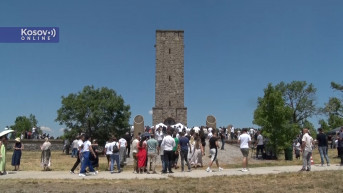
A group of non-governmental organizations from northern Kosovo has expressed concern over allegations of human rights violations and breaches of fundamental procedural guarantees during and after the Vidovdan commemoration at Gazimestan on 28 June, calling for an independent and impartial review of the conduct of the Kosovo Police and judicial authorities.
"With regard to the conduct of the Kosovo Police before and after the Vidovdan commemoration at Gazimestan on 28 June this year, as well as the judgment of the Basic Court in Pristina finding several individuals responsible for the alleged misdemeanor of 'arrogant behaviour' under Article 4, paragraph 3 of the Law on Public Order and Peace, we express our concern over serious allegations of violations of human rights and fundamental procedural guarantees, ranging from police conduct to the handling of the court proceedings," the Advocacy Center for Democratic Culture (ACDC), New Social Initiative (NSI), AKTIV, the Institute for Territorial Economic Development (InTER), and the Center for Affirmative Social Actions (CASA) said in a joint statement.
The organizations stated that, while securing the religious gathering at Gazimestan, the Kosovo Police systematically searched individuals arriving to mark Vidovdan, conducted detailed inspections of personal belongings, confiscated various items, and, according to available information, selectively prevented the entry of Serbian national and religious symbols.
The NGOs argued that such practices raise serious concerns that they constitute a disproportionate and discriminatory restriction on the right of members of the Serbian community to freely express their national, cultural, and religious identity.
They further noted that it is particularly concerning that this practice has been repeated for years despite repeated calls by the embassies of the Quint countries and international missions to respect the constitutional rights of all communities to use their symbols.
"We are also concerned by the allegations made by detained individuals regarding physical and psychological abuse by certain police officers and call on the Kosovo Police Inspectorate to investigate these allegations," the statement said.
The organizations recalled that the right to preserve and publicly express one's identity is guaranteed under Articles 24 and 58 of the Constitution of Kosovo, Articles 9, 10, and 14 of the European Convention on Human Rights, and Articles 18, 19, 26, and 27 of the International Covenant on Civil and Political Rights.
The NGOs also pointed out that all persons detained on 28 June had their personal identification documents confiscated, which had not been returned even by the time the judgment was delivered, despite the court's order that they be returned.
"Foreign nationals were instructed to pay their fines immediately in order to have their documents returned and to be allowed to leave Kosovo, even though the judgment had not yet become final, effectively preventing them from exercising their right to appeal," the statement added.
The organizations further noted that, according to publicly available information, after the defendants pleaded not guilty, no evidentiary proceedings were conducted, neither the defendants, police officers, nor any other witnesses were heard, and at the following hearing the court directly imposed fines of €700.
They argued that such conduct amounted to a denial of the right to defense and the right to an effective legal remedy.
In addition, they stated that there had been no individual assessment of criminal liability, as the judgment relied on general descriptions of conduct without establishing the specific actions of each defendant.
"We believe that qualifying conduct in the context of singing 'Kosovo–Serbia' and raising three fingers is inconsistent with the position adopted by the Supreme Court of Kosovo, which, relying on the case law of the European Court of Human Rights, has held that freedom of expression includes the right to express personal views as long as they do not constitute incitement to violence," the statement said.
The NGOs argued that these circumstances call into question the rights guaranteed under Articles 31 and 32 of the Constitution of Kosovo, Article 6 of the European Convention on Human Rights, and Article 14 of the International Covenant on Civil and Political Rights.
"As organizations working in the fields of the rule of law and human rights, we call on the competent institutions, judicial authorities, independent human rights institutions, and international missions to examine the legality of the conduct of the police and the court and to ensure equal protection of the rights of all citizens, without discrimination on the grounds of nationality or religion," the group of non-governmental organizations concluded in its statement.

0 comments