
Gudzic: Pristina seeks to reinforce the narrative of exclusive Albanian victimhood and Serbian guilt
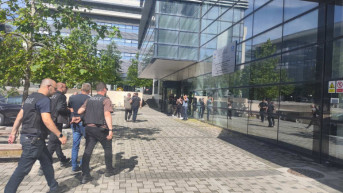
Historian Aleksandar Gudzic from Gračanica believes that behind the reopening of the Racak case and the new arrests of Serbs lies Pristina's effort to reinforce the narrative of exclusive Albanian victimhood. Journalist Milos Garic points out that the case is being revived at a time when verdicts are expected against former KLA leaders in The Hague, adding that Pristina's institutions have spent years collecting material and compiling lists of suspects, RTS reports.
Speaking about the recent arrests of Serbs in Kosovo, Gudzic said that Pristina's political elites are building their statehood narrative on the concept of exclusive Albanian victimhood and exclusive Serbian guilt, which is why they are reopening the issue of Racak nearly three decades later.
"In such a model, there is room only for exclusive Albanian victimhood and exclusive Serbian aggression. This context explains why, 27 years after the war, Pristina is launching war crimes proceedings and reopening the Racak issue, even though Racak was dismissed by the Hague Tribunal," Gudzic pointed out, as RTS reported.
Commenting on the mood within the Serbian community, Gudzic assessed that a sense of insecurity prevails among Serbs because no one can predict who might be the next target of an investigation or arrest.
"It is enough for someone to simply point a finger at a Serb for that person to be arrested. The entire process will be based on witness statements or photographs," Gudzic said.
Asked whether practically every Serb who was an adult in 1999 could become the subject of an investigation, Gudzic said that previous practice suggests that this is entirely possible.
"Practice has shown that it is very possible," Gudzic warned.
Discussing the reasons why the case is being revisited now, journalist Milos Garic pointed to the timing, which coincides with the expected verdicts against former leaders of the so-called KLA before the Specialist Chambers in The Hague.
"On July 20, verdicts are expected for Hashim Thaci, Kadri Veseli, and others, which will directly shed light on the truth about the 1998 and 1999 period," Garic stressed.
He believes that even the limited scope of the indictment against former KLA leaders could call into question a narrative that has been promoted for years among part of the Albanian public.
"And that alone is enough to challenge the thesis that Albanians persistently try to impose - that their struggle during that period was entirely justified, that the KLA committed no crimes, and that no Serbs suffered," Garic emphasized.
Referring to claims of "genocide against Albanians," Garic assessed that this is a theme on which Pristina's authorities have increasingly insisted in political discourse in recent years.
"The genocide narrative is something that Albin Kurti has been trying to firmly establish over the past few years as an issue that should receive special emphasis from the Albanian side, even though there is not a single piece of evidence of genocide," Garic said.
Speaking about the investigation that led to the current arrests, Garic said that the process began after Albin Kurti came to power and that Pristina's institutions spent years gathering material and compiling lists of suspects.
"These lists of the accused are secret. In the meantime, they introduced a law allowing trials in absentia, specifically so they could conduct judicial proceedings in the manner they are doing now," he said.
In his assessment, the way the recent arrests and detention orders were carried out highlights deep differences in the perception of reality between the Serbian and Albanian communities in Kosovo.
"We are dealing here with a fundamental problem that shows that in Kosovo and Metohija there are two different worlds, two completely different universes. We have one perception of reality, while they are creating a completely different one, and there is no point at which the two meet," Garic said.
Referring to the recent closures of Serbian institutions and pressure on the Serbian community, Gudzic believes that such moves are not a consequence of the election cycle but rather part of a long-term policy pursued by the authorities in Pristina.
"Albin Kurti wants to position himself as the father of the third Kosovo republic, as someone who will erase the last traces of Serbian presence in Kosovo and Metohija, as well as the last traces of international presence," Gudzic argued.
Gudzic believes that, under the current concept, Serbs are viewed as an obstacle to the full affirmation of so-called "Kosovo statehood."
"His logic is that through the Serbs, both the international community and Serbia will continue to have influence in Kosovo. That is the context in which I view everything that has happened in recent years, rather than through the lens of an election campaign," Gudzic said.
Asked whether such policies would continue after the elections, Gudzic said he does not expect any changes.
"I am certain that it will continue," Gudzic concluded.


0 comments