
Guyon: Kosovo is a frequent topic in global media, we will respond to lies with the truth
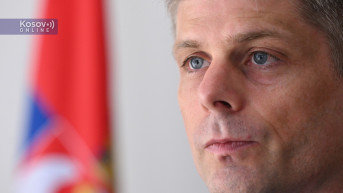
Director of the Office for Public and Cultural Diplomacy of Serbia, Arno Guyon, stated that special teams dedicated to countering fake news against Serbia will operate in five languages, and they will also monitor reports on Kosovo as one of the frequent topics in global media.
"Kosovo and Metohija are indeed frequent topics in Western media and global media in general, and we must approach this rationally and explain how things really are. On a political level, by always highlighting what has been agreed upon, what has been signed, what has not been signed, what has been respected by Serbia, and what has not been respected by Pristina. People need to know this at every level because it benefits us, as Serbia has always been constructive, Serbia has always stood by its word, which is not the case with Pristina. We need to work on this within the framework of the Belgrade-Pristina dialogue," said Guyon.
He emphasizes that attention will be focused, on one hand, on the authorities and diplomacy of certain countries, but that the intention is to address the people of those countries.
"By explaining how Serbs live today in Kosovo and Metohija. What their everyday life problems are, and through human stories, through a human lens, and through emotions, we want to reach the ordinary citizen in France, America, Germany. That is what interests them. If we look at how those who promoted the other side have worked over the past 30 years, they didn’t often speak about high politics, although they did, but very often about human fate. And we want to touch upon that human fate, to promote it, to show it, to explain how Serbs live today in Kosovo Polje, Prizren, or in Kosovo Pomoravlje," Guyon stated.
He said that the special teams will be tasked with combating fake news about Serbia with the truth.
"We can fight against these fake news with the truth by sending a rebuttal every time a false news story is published. When something negative is said about Serbia, we should respond with something positive through op-eds, articles, and appearances in their media. We also want to organize visits of foreign journalists to Serbia because we believe the best way for people to get to know Serbia is to experience it, to meet Serbs, to get acquainted with our authorities, and to see that what has been said and reported about Serbia and Serbs over the years does not correspond to reality, does not correspond to the truth," Guyon emphasized.
He assessed that the most difficult period for Serbia in the media sense was the period of the wars in the 1990s, which continued with the bombing of the Federal Republic of Yugoslavia in 1999.
"The worst fake news was spoken and transmitted during the 1990s, especially during the bombing of Serbia, the aggression of 1999. I'll quote one piece of fake news that seems unbelievable to us in the sense that we think no one could believe it, but in the West, everyone believed it because they had no idea what was happening here, nor about geography. They said, when they bombed the bridge in Novi Sad, that they did it to prevent the Serbian army from operating in Kosovo and Metohija. The problem was that no one in the West knew where Novi Sad was, that it was in northern Serbia, and where Kosovo and Metohija were, in southern Serbia. And so, they justified various crimes that had significant consequences for the people and the state. At that time, there was no response to it," Guyon said.
He adds that today, fake news is not always connected with the announcement of armed conflicts, but that this rhetoric is still present.
"We saw it in The Telegraph. An English journalist claimed that Serbia is preparing an incursion, an invasion of Kosovo and Metohija, which is a huge lie. We want to react to all of that because it greatly damages Serbia's image, as well as our foreign policy," Guyon emphasized.
He reminded that many journalists in the West built their careers based on fake news about the Balkans and Serbia, citing CNN journalist Christiane Amanpour as an example.
"People like that, who were ordinary journalists back then, are much more powerful today. Some of them are editors, directors of publications... When I was the president of a humanitarian organization, trying to promote the reality of how people live in Kosovo and Metohija, I faced this self-censorship, where a journalist is interested, wants to write, but actually gets a red card from the editor or the publication's director because it doesn't support what they have been reporting for years. This directly calls their credibility into question," says Guyon, adding that with effort and hard work, it is still possible to break through the "media barriers."
"And that is what we are going to do. It won't be easy, but that's what we are fighting for. That's why the Office for Public and Cultural Diplomacy was established. To fight for Serbia, for the Serbian people, to fight for the truth, and to change the image of Serbia and Serbs, as well as the history, in all global media," Guyon concluded.
0 comments