
Hill: No further agreements until the Serbs’ collective rights exercised - we made this clear to Kurti
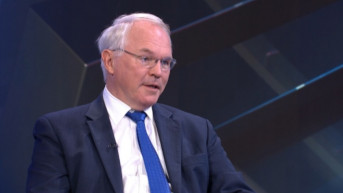
The US Ambassador to Serbia, Christopher Hill, said that today's Russia is "different" than it was in the past, that Europeans and Americans understood this and that he hoped that Serbia would understand this and impose sanctions on it due to the invasion of Ukraine. "Russia is not playing a positive role for Serbia on the issue of Kosovo," Hill told Insajder.
"We have to understand that a large number of countries that are smaller than Serbia have aligned themselves with the European Union and introduced sanctions. They are suffering because of it, but they want to show solidarity and show Russia that it is not good for them to cause various divisions. We hope that Serbia will understand that position. I think Serbia is expected to align with the EU, especially by the Europeans, because many countries suffer a lot by aligning with the sanctions. They expect Serbia to follow their example," Hill said.
Hill rejected the claim that Serbia was under "tremendous pressure" for not imposing sanctions on Russia and added that part of its path to the EU was the harmonization of foreign policy.
"I don't believe that there is huge pressure on Serbia. It has been politely told to Serbia several times that it should introduce sanctions, some were harsher than others, but there is an understanding that Serbia is in a unique situation," Hill added.
When asked why it was not enough that the Government of Serbia condemned the Russian aggression against Ukraine and signed almost all the resolutions of the United Nations and the EU because of it, Hill replied that this was true, but that Serbia had gained a reputation for "trying to sit on two chairs.", to be close with both Russia and Europe.
"Europeans say: “If you want to be with us, you have to align with us”. I would not use the word “pressure”. It is Ukraine that is under pressure. The idea of the sanctions is to pressure Russia so that it understands that aggression does not pay off and that it is best for Russia to stop this terrible war, to withdraw from Ukraine, to go to every Ukrainian village and beg for forgiveness," Hill emphasized.
Speaking about the fact that Serbia is almost completely dependent on Russia when it comes to gas supply, Hill said that efforts should be made for finding other sources of energy for Serbia.
"One is the Bulgarian connector that works quite well; there are other ideas to bring liquefied gas to Serbia from other sources. Honestly, I think that Serbia is not in a terrible situation this winter. Serbia, like other countries, must prepare long-term," Hill said.
Hill stated that, in the long term, he thought that Russian President Vladimir Putin would "return from his adventure" and that "in the long term" Russia would be an energy exporter as in the past.
"Unfortunately, Russia today decided to turn its energy sources into weapons, and all countries, including Serbia, must make an effort to find alternative sources of energy. Serbia is making progress and we are ready to support it, as it is the EU. Norway has helped Serbia a lot. I assume that there will be more advisory assistance, and maybe more investments from Norway. Many countries have told me that they will help Serbia with this. No one will criticize Serbia how it got into that situation, whose advice it followed, and why they sold the Petroleum Industry of Serbia (NIS) to the Russians. It was all in the past and there is no great benefit from it, and we have to focus on the future," he said.
Hill said that he understood that for Serbia, which supplied cheaper gas from Russia, the price of that energy was important, but he added that this was why the EU had tried to help Serbia and pay for increased gas prices.
"We all have to try harder to help. However, I'm sorry, but Serbia cannot say: 'We are some small poor country”. Serbia has its problems, but at the same time, it is a very successful country. It needs help, I'm not saying that's not the case, but other countries are also waiting in line for help and we have to help other countries because Russia has turned energy sources into weapons," Hill added.
When asked how it should be explained to citizens that Serbia was prohibited from importing Russian oil, but Hungary, a member of the EU, was not, Hill answered that in international politics, "one standard does not apply to every country."
"There are occasional deviations from the common standard, I understand the question, but my answer is that we understand what Serbia's needs are, and we are helping as well as the EU. Other countries are also trying to help, such as Azerbaijan and Norway. Serbia is not alone in this and that is extremely important in these times. It is important that someone watches your back and helps, it is like a team sport in relation to this behavior of Russia," he pointed out.
Commenting on the Resolution of the European Parliament, which questioned Serbia's further progress towards the EU, as well as access to funds, Hill said that it had sounded harsh, but that there had been no procedures to terminate Serbia's funds.
"Financial funds help Serbia's economy. They also help the EU so that Serbia can meet certain economic standards. I don't believe they will terminate those funds because the funds help everyone - including Serbia," he said.
When asked if he understood the existence of strategic relations between Serbia and Russia, bearing in mind the issue of Kosovo, Hill replied that it could not be said that Russia "plays a positive role in relation to Kosovo" and helped Serbia while causing "an energy and food crisis in the world".
"You must know that my government is interested in cooperating with the authorities in Belgrade and Pristina, as well as with the EU, to see if we can make some kind of progress - if it wasn't a difficult issue, it would have been resolved a long time ago," Hill said.
When asked who led the negotiations between Belgrade and Pristina, the European Union or the US, Hill replied that the negotiations were led by the EU, but that many countries, including the US, had envoys who supported the EU's special envoy Miroslav Lajcak, whose job, he said, was not easy.
"The EU itself is not unified in this matter, different countries have different attitudes, but they help," he said.
Commenting on the fact that Kosovo Prime Minister Albin Kurti had recently accepted a compromise solution on license plates at the insistence of the US ambassador to Kosovo, although he had rejected the same proposal two days earlier in Brussels, Hill replied that regardless, the EU was the one conducting the dialogue.
"The EU wanted to extend that deadline by two days to solve that issue. Issues like license plates do not help solve the Kosovo problem. Albanians are trying to see how much space they have for internationalizing their issues. Again, from the Serbian side - the Serbs live in Kosovo for centuries and Serbia wants to see what their collective rights and future are in Kosovo. We have to deal with that," Hill said.
Hill said that this fell under the issue of the Community of Serb-majority Municipalities, that is, to see what kind of structures could be formed so that the Serbs in Kosovo knew what awaited them.
"All this is a very difficult task - for the government in Pristina to understand. But thanks to the hard work of the EU, Kurti understood that the issue of the future of the Serbs in Kosovo must be an absolute priority and must be resolved in every normalization process," he added.
Commenting on the statement of Albin Kurti, who said that dialogue with Belgrade was not among his top three priorities and that he was only interested in an agreement on mutual recognition, Hill said that Kurti could say whatever he wanted to the media, but added that "giving statements does not mean to conduct politics".
"He will have to talk to negotiators in Europe, and both Americans and the EU have told him that he must solve the issue of the collective rights of Serbs in Kosovo. Be assured that there will be no further agreements without solving that issue," Hill said.
When asked about the so-called "Franco-German plan for Kosovo and Serbia", which, among other things, did not require Serbia to recognize Kosovo's independence but not to oppose Pristina's entry into the United Nations and other international organizations, Hill replied that the US supported the EU in the process of achieving a comprehensive normalization of relations between the two parties.
"If you ask me whether the Americans would like the two countries to recognize each other - of course. We have to be honest and clear, a lot of things have to be resolved before we get to that point starting with a more normalized approach because at the moment there is hardly any license plate agreement," he said.
Speaking about his call to the Serbs from Kosovo to return to the Kosovo institutions, from which they had left last month, Hill said that the Serbs would have to decide on this and that the US wanted them to return to the institutions and added that the position of the Serbs was: "We will return as soon as we see that the agreements are respected".
"At the end of the day, there is no agreement if only one side fulfills its obligations. So it seems, I agree with you (that the Serbian side fulfills its obligations) on that issue, but I would call for patience. Negotiations with Kosovo do not bring any immediate satisfaction. However, after a long period in which things moved slowly, the Americans are stepping up their efforts," Hill said.
When asked what he thought about Serbia's reforms in the areas of the rule of law, the fight against corruption, and democratic processes, Hill replied that it was an ongoing process.
When asked about the relations between Serbia and the US, Hill said that he hoped that the issue of the NATO bombing in 1999 had been overcome and stated that the US wanted the relations between the two countries to progress.
“Americans don't forget the past. We know that some things happened and that the past may not be bright. All kinds of bad things happened, especially in our relationship. I think we have to get over such events and realize that they are an opportunity to say: 'We got over it, now we are moving forward. We must not remain prisoners of the past," he said.
Speaking about his meeting with the Patriarch of the Serbian Orthodox Church, Porfirije, Hill said the conversation on interreligious issues in Serbia had been "very useful".
"Porfirije is someone who thinks in a modern way in certain important domains. I don't agree with him on everything, but I think the conversation was extremely good and I will continue to talk to various people. That's my job, to be able to understand this country, to understand it and explain what is happening in the US," he said.
Commenting on the appointment of former Minister of Internal Affairs Alexander Vulin as director of the Security Intelligence Agency, Hill said that it was up to the authorities to make such decisions and that the US "decides with whom to cooperate."
When asked about the developments in Bosnia and Herzegovina and the position of the Republika Srpska, Hill, who had worked on the Dayton Peace Agreement that had ended the war in Bosnia, replied that he thought that the people of Bosnia and Herzegovina had been free to change that agreement, but that they could not do something "against the interests of those others".
"In short, they have to come to an agreement. There were elections, it was tight, and some new personalities appeared, but I leave that to our embassy in Bosnia and Herzegovina. The situation can be resolved in favor of the citizens of Bosnia," he said.
He added that he was a big supporter of the "Open Balkan" initiative, which he said was one of the most exciting projects in the region, and that he would like Bosnia and Herzegovina to become part of that initiative.
comments