
Hoti: Von der Leyen’s visit confirms accelerated Western Balkans integration, but process remains conditional on reforms
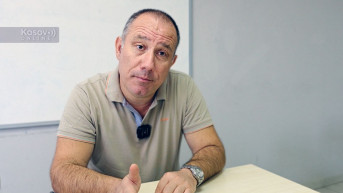
Dritan Hoti, a lecturer in international relations and geopolitics at Mediterranean University of Tirana, said that European Commission President Ursula von der Leyen’s visit to the Western Balkans confirmed the prospect of accelerated integration of the region into the EU, but stressed that the process was linked to reforms.
Hoti told Kosovo Online that messages about rapid integration were sometimes followed by talk of stagnation. According to him, this was linked to the level of domestic structural reforms in individual countries.
“The visit confirms the prospect of accelerated integration of the Western Balkan countries into the European Union. However, there is a phenomenon whereby we sometimes hear messages about rapid integration, followed by talk of stagnation, and this is linked to the level of domestic structural reforms in individual countries—in other words, to how successful those countries are. Look at Montenegro, which is considered more advanced in its European perspective compared with other countries as a result of certain reforms or the progress it has achieved in socio-economic development as a small country. The EU’s position is therefore linked to the process of domestic reforms,” he said.
Hoti said that it was precisely these domestic reforms that determined the positions taken by various European Union bodies.
Regarding Serbia and the EU’s approach toward the country, Hoti stressed that Serbia continued to be regarded as a country with a particular role and that an important question was how it would be approached both in terms of international relations and the institutional process of European integration.
“Serbia occupies a particular position in the Western Balkans. Historically, it has played a role in relation to centers of power outside the European Union, primarily Moscow, which continue to regard it as a country with a particular role in our region, but also in Southeast Europe, or what we might call the central part of Southeast Europe. A major issue is how Serbia will be approached in terms of international relations, as well as in terms of the institutional process of European integration. In Serbia’s case, its geopolitical orientation and the historical analysis of Serbia’s role in the dissolution of former state structures, such as Austria-Hungary, or of former spheres of influence in the Western Balkans, are intertwined with the institutional process of the country’s integration into the European Union,” Hoti said.
He expects there to be attempts, or expectations, to impose conditions on Serbia that, as he put it, will be geopolitical in nature.
0 comments