
Igrutinovic: The parties in the dialogue have different expectations, and the EU is not particularly
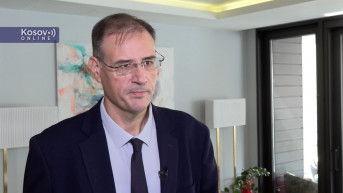
Milan Igrutinovic, a research associate at the Institute for European Studies, stated that the failure of yesterday's round of dialogue between Belgrade and Pristina was not unexpected, noting that most rounds in recent years have ended unsuccessfully. He added that the two sides have different expectations and that the EU is not particularly effective.
Speaking to Kosovo Online, Igrutinovic said that Kosovo's Prime Minister Albin Kurti is in the midst of advancing what he described as a rather radical policy, imposing Pristina's authority and will over the Serbian community in the north.
Referring to the warnings Kurti receives from Western embassies, EU officials, and even Washington, Igrutinovic explained that Kurti is operating within a maneuvering space that allows him to act this way, claiming that he is merely completing Kosovo's sovereignty over its entire territory.
"They obviously don't have, nor are they willing to use, any serious means against him. They treat Kosovo as a sovereign state and its government as, more or less, sovereign, and he constantly pushes the red lines he faces. The EU is trying to support the dialogue, but it doesn't like what he's doing. However, it feels powerless. There's no internal consensus that would lead to a harsher policy toward him," Igrutinovic said.
He added that Kurti is still under a certain regime of sanctions, noting that, for the EU, this seems to be enough of a punishment.
"But they don't want to lose the little influence they have on the ground. They keep saying, 'let there be peace,' but in the end, it's the Serbian community in Kosovo that suffers the most. The sides come with different expectations, and the EU is not particularly effective, although it's hard to imagine that there are things that could be negotiated under these circumstances," he stated.
According to him, the EU could act this way or behave as it does toward Russia—by imposing tough sanctions.
However, he notes, the issue between Belgrade and Pristina is far from being something that could be addressed in that way.
"There is deep disagreement both in Belgrade and Pristina about what exactly should be achieved and how, and the EU doesn't see the point in forcing the two sides to reach an agreement that no one would adhere to tomorrow because it doesn't align with the publicly declared interests or the deeper interests of either community," he emphasized.
He added that the EU is not under pressure to resolve the issue quickly since the normalization process is tied to the process of European integration.
Noting that Kosovo also has its own European path, Igrutinovic explained that even that path is not one with a short deadline but something left for the future.
"Thus, the EU doesn't feel any particular time pressure to resolve this as long as things remain relatively peaceful. Even though incidents occur, since we are not in a state of war, the EU will continue to approach the process in this or a similar manner, just to prevent further escalation. They are operating under the assumption that they'll deal with it as it goes, if that can even be called 'dealing with it,'" Igrutinovic concluded.



0 comments