
Ivanov: European elections will not affect the Belgrade-Pristina dialogue; the normalization process is not functioning
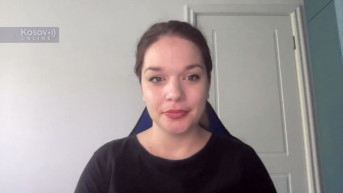
Helena Ivanov, a scientific collaborator at the Henry Jackson Research Center, says that she does not expect the upcoming European elections and potential new staffing solutions within EU institutions to contribute to progress in the Belgrade-Pristina dialogue because the normalization process is not functioning due to the way these discussions are conducted and the failure to fulfill the obligations that the parties have accepted.
"As for the normalization process itself, I do not see any significant improvements. The reason why the normalization process is not functioning does not necessarily have to do with who is at the helm of the European Union but rather with how these discussions are conducted and how the EU has positioned itself in these discussions. Of course, there is a significant problem with the failure to fulfill obligations that the parties have accepted. This includes not only the Brussels Agreement over a decade ago but also more recent agreements such as the Ohrid Agreement and the Brussels Agreement. We simply have many other issues that are unrelated to who leads the EU but hinder the normalization process between Kosovo and Serbia," Ivanov stated for Kosovo Online.
Commenting on announcements that changes could occur at the head of the European Commission after the June elections in the European Parliament, with Ursula von der Leyen potentially being replaced by the Prime Ministers of Croatia or Greece, Andrej Plenkovic or Kyriakos Mitsotakis, Ivanov says that even if this happens, it will not impact the ongoing negotiations and the Belgrade-Pristina dialogue because decisions are made "at a much higher level."
"The normalization process, relations between Serbia and Kosovo, and resolving all outstanding issues are decisions made at a much higher level, and this is a consistent policy that the European Union has been pursuing for many years. Therefore, the maneuvering space would be limited for significant changes to occur in how the EU deals with the Western Balkans," Ivanov believes.
She adds that the selection of candidates for the President of the European Commission is viewed differently by Serbia and Kosovo.
"Looking from Serbia's perspective, it would probably be slightly better if Greece were to be the main country, and its candidate replaced Ursula von der Leyen rather than Andrej Plenkovic. This is due to the relations between Serbia and Greece on one side and, on the other hand, the relations between Serbia and Croatia. Also, it involves Greece's perception of Kosovo and, on the other side, Croatia's stance toward Kosovo," Ivanov concludes.
She assesses that the mention of Plenkovic and Mitsotakis indicates that these two options are on the table, meaning serious consideration is being given to them as candidates for the head of the European Commission.
"The fact that Plenkovic and Mitsotakis are mentioned indicates that these two options are on the table. However, when it comes to Mr. Plenkovic, his name has been mentioned several times as a potential replacement for Ursula von der Leyen, but it has always fallen through. It didn't happen. Whether this will be the case this time remains to be seen, but the fact that these two names are being mentioned suggests that serious thought is being given to this. What we also know is that Plenkovic has long been considering European politics, he wants to enter European politics, and it is certain that this position would interest him. I believe this is equally true for his potential opponent," Ivanov says.
Regarding whether this would lead to a de facto change in the approach to the Western Balkans, Ivanov emphasizes that there should be no doubt about it.
"We can certainly expect somewhat different approaches regarding the Western Balkans. On one hand, a Greek candidate would be much more favorable to Serbia, much closer to the Serbian position, and this might have implications for relations between Serbia and Kosovo and the normalization talks. On the other hand, Plenkovic and Croatia unequivocally recognize Kosovo as an independent state, and in that sense, these two individuals would have a somewhat different approach. However, in terms of significant decisions, I don't believe there will be major differences because, when it comes to the Western Balkans, accession to the EU, and relations between Kosovo and Serbia, and talks about the normalization of relations between Kosovo and Serbia, these are decisions made at a higher level. These are established policies, and anyone replacing Ursula von der Leyen, be it one of them or someone else, would have relatively limited room to bring about significant changes in how the EU deals with the Western Balkans," Ivanov emphasizes.


0 comments