
Jankovic: The wounding in Strpce shows that Serbs in Kosovo live under constant threats
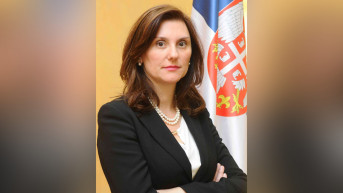
The wounding of an eleven-year-old Serbian boy and a 21-year-old man in Strpce shows that Serbs in Kosovo have to live in fear, insecurity and under constant threats, the ambassador of Serbia to Germany, Snezana Jankovic, says.
Jankovic, for the "Berliner Zeitung" daily paper, emphasized that this wounding showed that the international community had to act urgently.
"Actions against the Serbs in Kosovo must be stopped immediately," she demanded.
Jankovic pointed out that peace and stability were of the greatest importance for Serbia, in order to ensure economic growth, development, and investments.
She criticized the dangerous and unilateral actions of Pristina, as well as the particular refusal of the government of Albin Kurti to establish the Community of Serb-majority Municipalities, provided for in the Brussels Agreement from 2013.
That refusal, she says, is "among other problems of the Serbs in Kosovo and Metohija, the reason why the Serbs left the temporary institutions".
She reminded that the establishment of the Community of Serb-majority Municipalities was also sought by the American government.
"At this moment, we are not optimistic about the situation. It would be of the utmost importance for the EU to increase the pressure on Pristina," Jankovic explained.
Regarding the EU's demand that Serbia joins the sanctions against Russia, she recalled that Belgrade had clearly condemned Russia's attack on Ukraine.
"Serbia knows what an attack against international law is because we ourselves survived such an attack in 1999 and suffered under sanctions for ten years. Participation in sanctions is not possible due to our national interests, as well as our great dependence on Russia in the energy sector," she explained.
On the other hand, she points out, our own experience has shown that sanctions affect only the population of a country, but not the government.
"Legitimate sanctions should be adopted only by the UN," the ambassador in Berlin underlined.
comments