
Serbian community between Trump and Kurti: To what extent do obligations toward Serbs affect the strategic dialogue between Kosovo and the United States?
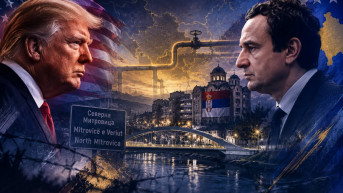
In separate statements, the U.S. Department of State and the United States Embassy in Pristina have said that the continuation of the strategic dialogue with Kosovo requires stability and the fulfillment of obligations toward the Serbian community. However, interlocutors interviewed by Kosovo Online argue that the principal obstacles are the lack of functional institutions and the unwillingness of the Kosovo authorities to advance Washington's strategic interests by joining the U.S.-backed natural gas network.
Written by: Jelena Novakov
According to the interviewees, the U.S. administration's reference to the Serbian community as a moral prerequisite serves primarily as leverage to pressure Albin Kurti to change his political course. At the same time, they suggest that the Kosovo prime minister may be deliberately postponing alignment with U.S. interests in the hope that a future Democratic administration—one that has historically been more supportive of Kosovo's interests—will return to power.
A spokesperson for the U.S. Embassy stated that, before planning for the continuation of the strategic dialogue with Kosovo can proceed, Washington wants to see concrete steps by the Government of Kosovo toward achieving the shared objective of strengthening peace and stability as the foundation for mutual economic prosperity, including the fulfillment of obligations toward the Serbian community. A similar statement had been issued only a few days earlier by the U.S. Department of State.
Opposition politicians have warned of the risk of Kosovo's economic and political isolation, noting that conditions are now being placed on Pristina while Serbia has already launched a strategic dialogue with the United States. According to Democratic Party of Kosovo (PDK) official Ariana Musliu Shoshi, this is a direct consequence of the policies pursued by caretaker Prime Minister Albin Kurti. Democratic League of Kosovo (LDK) official Përparim Rama likewise assessed that relations between Kosovo and the United States are at their lowest point ever and said that Kurti owes citizens a clear explanation of the current situation.
Meanwhile, the Chargé d'Affaires of the U.S. Embassy in Kosovo, Anu Prattipati, has repeatedly called on Kosovo to join the U.S.-backed liquefied natural gas infrastructure network, while the American Chamber of Commerce in Kosovo has urged the new institutions, currently in the process of being formed, to make this a priority. The Chamber warned that Kosovo's refusal to join the gas network is jeopardizing its relationship with Washington, a concern echoed by numerous Kosovo officials and analysts.
In September last year, the United States suspended the strategic dialogue with Kosovo indefinitely due to concerns over the actions of the Kosovo Government.
The Serbian Community as a Pretext
Political scientist Ognjen Gogic stated that the United States may invoke the issue of the Serbian community as a moral condition for resuming the strategic dialogue with Kosovo, while the real motivations lie in Washington's economic and pragmatic interests, including connecting Kosovo to regional gas infrastructure through North Macedonia.
According to Gogic, the U.S. decision not to resume the strategic dialogue cannot be separated from Kosovo's political crisis because Washington cannot engage in serious cooperation with institutions that are not fully functional. At the same time, he argues that the Serbian community is neither the only nor necessarily the principal reason behind the U.S. decision.
"It should also be borne in mind that the current U.S. administration is highly pragmatic and is often described as transactional in international relations. Therefore, it is highly questionable whether the real reason is its policy toward the Serbian community, because, in the meantime, the issue of natural gas has emerged in bilateral relations between the United States and Kosovo," Gogic told Kosovo Online.
As he explained, the United States wants Kosovo to connect to regional gas infrastructure through North Macedonia, a proposal rejected by the current authorities in Kosovo.
"So the question is whether the real issue is the Serbian community or whether other, more economic and pragmatic considerations are actually at play. The United States then invokes the Serbian community, presenting the decision as a moral one guided by values," Gogic said.
He believes that, had the Kosovo Government accepted the proposal to connect to the gas pipeline through North Macedonia, it is highly unlikely that the United States would have refused to resume the strategic dialogue, given that energy and infrastructure would have been among the topics under discussion.
"In reality, there is a whole range of factors that have led to the suspension of the dialogue until further notice, and politically the most effective justification is to invoke the Serbian community. In practice, however, we do not see the United States intervening on behalf of the Serbian community in Kosovo. Instead, it is taking measures primarily to protect its own interests," Gogic assessed.
He added that there is a possibility Kurti will seek to prolong the institutional crisis because doing so enables him to avoid both the issue of the Association of Serb-Majority Municipalities and the question of connecting Kosovo to the gas pipeline through North Macedonia.
"As long as the institutional crisis continues, Kurti remains prime minister, albeit in a caretaker capacity. It makes little difference to him whether he serves with a full mandate or in a caretaker role because practice has shown that he can implement the policies he wants even as caretaker prime minister, while at the same time having an excuse not to engage in more sensitive issues, such as obligations toward the Serbian community, including the Association of Serb-Majority Municipalities or the self-governance mechanism for the Serbian community envisaged under the Brussels and Ohrid Agreements," Gogic said.
Energy and the U.S. Elections
Petar Donic, an associate of the New Third Way organization, assessed that the position of the Serbian community is an important element of the strategic dialogue between the United States and Kosovo, but that other factors are also influential, including the stability and functioning of Kosovo's institutions, energy, telecommunications, and political developments in the United States.
Donic observed that, from Pristina's perspective, one of the principal reasons for delaying the strategic dialogue is the absence of functional institutions.
"A strategic dialogue requires extensive institutional preparation on both sides. If a country has been politically blocked for two years, that simply cannot be accomplished, and the appointment of the ambassador also took a long time. It is unrealistic to expect this to happen quickly. In addition, Kosovo still faces unresolved issues concerning energy, telecommunications, and, on top of all that, the Serbian issue," Donic told Kosovo Online.
He believes that the agenda of any future strategic dialogue with Kosovo could include energy, 5G networks, and the position of the Serbian community.
"It is no secret that the current U.S. administration is not particularly enthusiastic about Albin Kurti's government, which won the largest share of votes in the elections but still failed to secure enough support to form a government. At the same time, the Serbian issue remains a condition," Donic said.
He noted that Kurti's political platform has focused on consolidating Kosovo's institutions and preventing the establishment of the Association of Serb-Majority Municipalities, whereas Washington has placed that issue back on the agenda.
"We will see whether this gives additional momentum to the possibility of the Serbian List playing a role in the new government," Donic said.
Asked whether it is currently in Pristina's interest not to meet U.S. demands relating to the Serbian community, Donic replied that the answer depends on several factors.
"First, we need to see how quickly the new government will be formed and whether the process will be as difficult and prolonged as last time. Then Kosovo must elect a president. That is an even more demanding requirement because 80 votes are needed, which could trigger another political crisis and even lead to the dissolution of parliament," Donic cautioned.
He added that any further political crises in Kosovo could have an additional impact on relations with Washington, while political developments in the United States, including the upcoming congressional elections, will also play an important role.
"All of that must be taken into account before considering the Serbian issue, which is important but not the most important factor in this context, because the functioning of the Kosovo state and the elections in its principal ally—a state without which Kosovo effectively could not exist—are also at stake," Donic concluded.
The Serbian Community and Kosovo's Interest
Analyst Nexhmedin Spahiu stated that it is in Kosovo's own interest to fulfill its obligations toward the Serbian community and that Pristina should implement the agreement reached in Brussels instead of imposing additional conditions for its implementation.
"It is in Kosovo's national interest to implement the agreement reached between Prime Minister Albin Kurti and President Aleksandar Vucic in Brussels. That remains the primary interest of Kosovo, but also of Serbia, the region, and all parties seeking peace and stability in the Balkans," Spahiu told Kosovo Online.
He argued that imposing additional conditions for the continuation of the implementation process serves no benefit to Kosovo, whose objective, in his view, should be peace.
Commenting on the strategic dialogue between Kosovo and the United States, Spahiu said that the absence of functional institutions is not the reason why Pristina currently lacks such a dialogue with Washington.
"That is not the reason at all. Prime Minister Kurti believes that his policy is the correct one, but that does not necessarily mean it serves Kosovo's national interests," Spahiu said.
He reiterated that fulfilling obligations toward the Serbian community is in Kosovo's own interest.
"There is no doubt about that. Why Prime Minister Kurti is not doing so is a question that should be addressed to him," Spahiu concluded.
Albin Kurti's Policies
Former Democratic Party of Kosovo MP Xhavit Haliti stated that Washington's progress in its dialogue with Belgrade and the suspension of its dialogue with Kosovo are the result of the domestic and foreign policies pursued by caretaker Prime Minister Albin Kurti.
He argued that it was Kosovo itself that caused the suspension of the strategic dialogue with the United States through the actions of Kurti's government.
"We will continue to have problems with Serbia for a long time. International pressure can help us embark on the path recommended by our friends, so that we can overcome certain issues and provide one another with a future... Figuratively speaking, it was Kosovo—not Serbia—that suspended the dialogue. Through poor governance, Kosovo has effectively imposed sanctions on America," Haliti told Kosovo Press.




0 comments