
Jankovic: Writers should visit Kosovo more often, that is not an ordinary audience
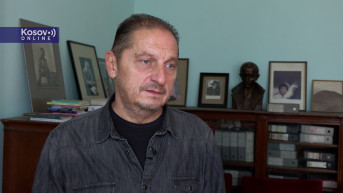
Writers from central Serbia visit Kosovo and Metohija, and they should do so more often. It is necessary to plan, systematically and institutionally, a way to increase their presence in order to meet the cultural needs of the people living there. However, I believe that on the other side, there is no interlocutor willing to respect these needs. They don't even want to respect the needs related to food, healthcare, and social protection... It is a terrible situation, says Milos Jankovic, president of the Association of Writers of Serbia, for Kosovo Online.
Whenever a writer visits Kosovo, the hall is always full, and a special kind of emotion is created, he emphasizes.
"That is not an ordinary audience, and the circumstances dictate that it can't be an ordinary literary evening, ordinary presentation, ordinary discussion... Nothing is ordinary down there anymore, and it’s not our fault," Jankovic says bitterly.
In light of everything happening in Kosovo, he adds, the issue of cultural life is no exception. As the daily life of the Serbian people in Kosovo has been complicated by measures that, he says, are unprecedented in recent history, imposed by Pristina's institutions, the same is happening with culture.
When writers travel to Kosovo, he notes, there are sometimes administrative issues of various kinds, and sometimes there aren’t.
"These issues mostly arise if you are carrying books with you. It’s logical to bring books for the audience and for presentation if you are organizing a literary evening or participating in literary programs, but at administrative crossings, this creates certain problems. That's one issue. Another is that all printed materials, such as our Literary Newspaper, don’t reach our subscribers because they are printed in Cyrillic, or the address is marked as 'unknown,' 'address cannot be determined,' and various other excuses are used to return them. The same thing happens when we send books to libraries as donations—they are returned or not accepted, especially if they are written in Cyrillic. We have pointed this out multiple times in writing to the international community and cultural institutions in Europe. The most basic human rights are being persistently denied because it is a right to speak your own language and to read in your own script," says the president of the Association of Writers of Serbia.
At the end of September, during ceremonies dedicated to Lazar Vuckovic, Jankovic highlights that a delegation of Serbian writers, including the vice president of the Association of Writers of Serbia (UKS), Vidak Maslovaric, visited Pec, the Patriarchate of Pec, and Prizren.
"The Society of Writers of Kosovo and Metohija is a collective member of the Association of Writers of Serbia as a guild organization of Serbian writers in Kosovo and Metohija, and of course, they are also individual members. We are in constant contact with our people, and we participate individually in various events organized in Kosovo and Metohija. Naturally, these events have now been reduced in light of all these developments, which is understandable. This area remains largely untouched, but I assume that Pristina's institutions, with their, we can freely say, terrorist approach to matters and to the reality that Serbs face every day, will probably turn their attention to cultural institutions and the artistic programs and events taking place there," Jankovic says.
There was an idea, Jankovic says, to hold a session of the UKS board in Kosovo, since there is always a member from the Society of Writers of Kosovo and Metohija on the board. However, it turned out that this also created certain administrative and technical issues.
"Why everyone? Why 20 people? And why there? Not wanting to create additional problems for our people there or to give any reason for them to be subjected to any kind of harassment, we have temporarily abandoned that idea," says Jankovic.

0 comments