
Marsenic: Imposing a "cancel culture" on Serbs
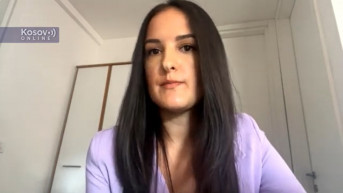
Marija Marsenic, a sociologist at the Institute for European Studies, assesses that the punishment of Serbs for posting content on social media is a new form of pressure and part of a broader process of political repression, which in sociology is studied as the "practice of cancel culture."
"Punishing Serbs in Kosovo and Metohija for social media posts can be interpreted as part of a broader process of political repression, ethnic tensions, and attempts to control the narrative by the so-called Kosovo authorities, and this can freely be perceived as the abolition of yet another human right, namely, the right to freedom of speech," Marsenic said to Kosovo Online.
According to her, this type of restriction on freedom of speech and control of social media posts or publicly spoken statements does not reflect the level of democracy in Kosovo but rather the practices of, as she highlights, authoritarian regimes.
As she explained, this can include fines, detentions, or other forms of repression against individuals who express views contrary to the main narrative.
"The intention is to intimidate Serbs in Kosovo and Metohija with these punishments and, so to speak, force them to self-censor so that they do not provoke some of the mentioned penalties and consequences. And this step only indicates a reduction in democratic freedoms and an increase in repression against the Serbian population," Marsenic said.
She added that in sociology, such phenomena are defined as the practice of "cancel culture."
"This new form of pressure or repression against the Serbian population in Kosovo and Metohija can be equated in sociology with the practice of so-called cancel culture, where individuals, in this case, Serbs, are canceled or nullified because of views perceived as contrary to the dominant narrative in the community to which they belong. The practice of so-called cancel culture, which I expect will be implemented by the so-called Kosovo authorities, will involve monitoring social media accounts and analyzing all possible posts that contradict the dominant narrative in the future, to devise new reasons for arresting Serbs, intimidating them, and repressing them," Marsenic warned.
As she added, such sanctions are a form of discrimination based on ethnicity.
"Such punishment of Serbs for their online activities is a form of discrimination based on ethnicity and involves the selective enforcement of laws on interethnic tolerance. Therefore, such actions by the so-called Kosovo authorities aim to demonstrate power and strengthen political control, intimidate, and create an atmosphere of fear and violence, as well as to ethnically and socially marginalize Serbs, further isolate them, and deepen the conflict within the Serbian community in Kosovo and Metohija," Marsenic concluded.



0 comments