
Jevtic: Ibar Bridge issue should be addressed with respect for the position of the Serbian people

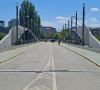
Serb List Vice President Dalibor Jevtic said that the possible opening of the main bridge over the Ibar River would pose a threat to the security of the Serbian population in northern Kosovo, stressing that the issue should be addressed in a manner that ensures respect for the position of the Serbs, RTV reported.
Jevtic told Tanjug that September 1 was being mentioned in Pristina as a possible date for the opening of the bridge and expressed hope that this would not happen.
He said it was inconceivable that, given that there had been more than 800 ethnically motivated attacks against Serbs over the past several years, the EU could assess the security situation as being conducive to opening the bridge.
“Unlike what someone writes in various reports, we know very well what the situation on the ground is. The latest case, the beating of Nenad Raskovic, certainly confirms this. That situation, that incident, clearly demonstrates the attitude not only of the regime in Pristina but also of the institutions toward the Serbian people. Such institutions cannot be entrusted with protecting the Visoki Decani Monastery, nor can the opening of the bridge be allowed,” Jevtic stressed.
He said that the state leadership in Belgrade, primarily President Aleksandar Vucic, was working on the issue every day, while the Serb List was also doing everything it could on the ground to draw attention to the dangers posed by such a move.
According to Jevtic, part of the international community, and consequently part of NATO, supported Albin Kurti in his actions. He said this was precisely what was most dangerous because all these processes, for which Kurti enjoyed support, were resulting in Serbs leaving Kosovo, making that part of the international community complicit in what he described as the ethnic persecution of Serbs.
“The question we are asking is: on what basis, and who assessed that the security situation is good?” Jevtic said, stressing that the path toward greater security was one of building trust.
He said that there was currently no trust in the regime in Pristina because Albin Kurti was perpetrating institutional violence.
“He has not achieved a single other result during his time in power. And as I have said many times before, I will repeat it today: Albin Kurti, as someone who is part of the problem and as a man whose record shows that he has always been there when crises and situations contrary to the process of stability were being created,” Jevtic said, RTV reported.
He stressed that the Serbian people had always advocated peace but would not stand by silently if their security were threatened, adding that there would certainly be a response, but a democratic one.
“Serbs do not agree with any unilateral actions that jeopardize their daily lives and security,” Jevtic stressed.
He added that he had information indicating that incidents could occur, including a mass attempt to cross the bridge and consequently attacks on residents of North Mitrovica, noting that this was precisely what the Serb List had been warning international representatives about in its discussions with them.
“The position of the Serbian people, and therefore of us as the elected political representatives of the Serbian people in Kosovo and Metohija, is that we want this issue to be resolved in a way that respects the position of the Serbian people and with the aim of ensuring peace and stability,” Jevtic said.
Speaking about the demolition of structures at Lake Gazivode, he said it was a classic example of the use of force against one people and of institutional violence through the implementation of certain decisions without judicial proceedings.
“Given that this is property belonging to Serbs who have owned it for decades and who, as they themselves have told us, possess the appropriate documentation for that property, Pristina’s objective is very clear: it wants to use this as another means of forcing Serbs to leave these areas,” Jevtic said.
He pointed out that there were thousands of illegally constructed buildings throughout Kosovo, raising the question of why only Serbian houses were considered problematic and why only Serbian houses were being demolished.
Jevtic cited the example of Strpce, where a decision had been issued ordering the demolition of an illegally constructed building. Although the decision was in accordance with the law, he said, it had not been enforced because the building had been illegally constructed by an Albanian businessman.
“And that is a classic example of the double standards being applied. No one can convince me, or other Serbs in Kosovo and Metohija, that what is happening at Lake Gazivode and the demolition of structures there represents the enforcement of some law, as the regime in Pristina claims,” Jevtic said.
0 comments