
Jevtic in Washington warns of Kurti’s discriminatory acts: Intends to declare Serbs foreigners and force them out
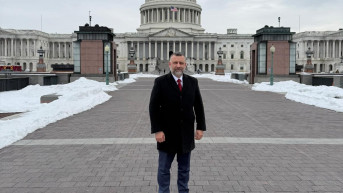
The official visit of Dalibor Jevtic, Vice President of the Serb List, to Washington concluded with meetings at the U.S. State Department’s Bureau of European Affairs, where he met with the Deputy Director of the Office of Western and Central European Affairs, Lyn Debevoise, and his associates. During the visit, Jevtic also held talks with members of the U.S. Congress, including Representatives Tracey Mann and Robert Aderholt.
Jevtic also attended the traditional National Prayer Breakfast, where participants were addressed by U.S. President Donald Trump.
On the margins of the Prayer Breakfast, Jevtic took part in various forums focused on the situation in Southeast Europe and the Western Balkans, and held discussions with numerous leaders, including current and former members of the U.S. administration.
According to a statement published on Facebook, Jevtic used these meetings to draw attention to the difficult position of the Serbian people in Kosovo, with particular emphasis on the discriminatory and ethno-nationalist policies pursued by the current authorities in Pristina. The intention of Pristina to implement the Law on Foreigners and Vehicles, as well as announcements by caretaker Prime Minister Albin Kurti regarding the forcible takeover of Serbian education and healthcare institutions, along with developments surrounding the most recent election process and the failure of the Central Election Commission (CEC) to certify the results of the Serb List, were the main issues Jevtic raised at all of his meetings.
“All these processes—everything Kurti has been doing over the past five years—have only one objective: the ethnic cleansing of Serbs from Kosovo. The international community, and Washington in particular, must not remain on the sidelines and must stop Kurti from achieving this goal. We do not need statements of condemnation; we need concrete measures and decisions that will prevent Kosovo from being left without Serbs. Through its actions and policies, the regime in Pristina has caused around 15 percent of Serbs to leave Kosovo in recent years,” Jevtic said, among other remarks.
On this occasion, he called on his interlocutors to prevent any attempt by the authorities in Pristina to take over Serbian institutions, including education and healthcare, and to halt the implementation of the Law on Foreigners. As he emphasized, these are discriminatory acts through which Kurti seeks to declare Serbs foreigners on their centuries-old homeland and, as stated, to force Serbian children to learn a different history and values that the Serbian people will never accept.
Jevtic also pointed out that in the recently held parliamentary elections in Kosovo, Kurti once again assisted Nenad Rasic in securing a parliamentary mandate in the Kosovo Assembly through Albanian votes, which, according to Jevtic, represents yet another blow to democracy and poses the danger that in the future the majority population in Kosovo could elect representatives of other ethnic communities.
“In such a situation, we face the risk that those elected and granted parliamentary mandates will not represent citizens and their own people, but will, like Rasic, act in the interests of majority parties,” Jevtic stressed, adding that the very spirit of the Ahtisaari Plan was to prevent precisely such scenarios and to provide mechanisms for the political and institutional protection of Serbs and other non-majority communities in Kosovo.
“The Serbian people in Kosovo and Metohija have chosen their representatives, very clearly giving their support to the Serb List, and according to the votes of Serbs, all ten seats belong exclusively to the Serb List. Disregarding the electoral will of citizens—in this case, Serbs—creates the risk of deepening the crisis and continuing the erosion of cooperation and coexistence in Kosovo,” Jevtic told his interlocutors in Washington.
The statement concludes that Jevtic encountered understanding and support among his interlocutors, which, as he noted, is encouraging and gives hope that the aforementioned processes can be halted in order to prevent further displacement of Serbs and the creation of a mono-ethnic society in Kosovo.
0 comments