
Joksimovic: Tensions eased in Munich, but Europe remains concerned about the future of transatlantic relations
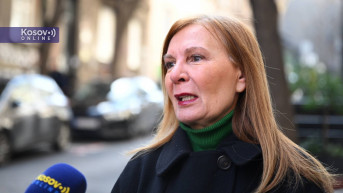
Aleksandra Joksimovic, Director of the Center for Foreign Policy, told Kosovo Online that following the messages heard at the three-day Munich Security Conference, there are grounds for cautious optimism regarding EU–United States relations. According to her, tensions have subsided, yet Europe’s concern about the future of transatlantic relations persists.
Joksimovic noted that the entire conference was focused on the future of relations between Europe and the United States, and that Europe had been considerably unsettled by last year’s remarks in Munich by U.S. Vice President J. D. Vance, which were sharply critical of Europe.
The very announcement of this year’s U.S. delegation, led by Secretary of State Marco Rubio, she said, indicated that the messages would this time be framed in more diplomatic language.
“Rubio received ovations after stating that America will always be a child of Europe and that the goal of the United States is not to undermine transatlantic relations. On the one hand, this message brought a sense of relief to the European side; on the other hand, European diplomats in the corridors remained concerned, emphasizing that the MAGA concept is anti-European and anti-neoliberal, and that it remains on the U.S. agenda. Moreover, in the second part of his speech, Rubio spoke about the need for Europe to join U.S. efforts or at least not stand in their way. In that context, we can say that, on the one hand, tensions have eased, but on the other, Europe’s concern about the future of transatlantic relations will remain on the agenda,” Joksimovic stated.
Another highly significant topic, she emphasized, was the war in Ukraine. The new round of negotiations to be held in Geneva, in her assessment, will not be decisive any more than the previous ones, and a final resolution remains distant.
“On this issue, Europe and the United States are not aligned. For example, we heard Finnish President Alexander Stubb say that he does not see President Putin intending to enter into a peace agreement or to end this war, and that such an outcome should not be expected. On the other hand, Chancellor Friedrich Merz delivered an important message, stating his intention for the Bundeswehr to become the strongest conventional army within a very short period. For the first time since the Second World War, we are also seeing German troops stationed outside Germany — in Lithuania — in anticipation of a potential new attack by the Russian Federation, in this case against a member state of the European Union or NATO,” she said.
The President of France, Emmanuel Macron, she observed, conveyed somewhat different messages.
“He believes that Europe should be more engaged and has already dispatched a diplomatic envoy to prepare the ground for potential further talks with Putin, as Macron considers that no agreement can be reached without Europe. In that context, I believe he is entirely correct, though the question remains as to the path by which this will be achieved,” Joksimovic noted.
She further stated that one of the 20 points reportedly included in a potential peace agreement envisions Ukraine becoming a member of the European Union by 2027. However, Kaja Kallas has already indicated that there is no EU consensus on such a timeline.
“This will undoubtedly be the subject of further debate — how Europe will continue its enlargement process and whether this should occur through a security-driven approach. Chancellor Merz firmly stated that there is no chance of Ukraine becoming a member in 2027. At the same time, there is increasing discussion about possible modalities involving a broader package that would also include the Western Balkans — potentially an accelerated track that could reverse the traditional order, with membership preceding full reforms. I am not certain how realistic this scenario is, but it will certainly be one of the key topics in the period ahead within the EU. As we can see, President Zelensky will strongly advocate for such a scenario,” she emphasized.
As the third major topic of the conference, she highlighted the issue of nuclear deterrence.
“We witnessed a meeting between Macron and Merz on this issue. Within the EU, only one country possesses nuclear weapons — France. At the same time, we heard British Prime Minister Keir Starmer emphasize that the United Kingdom should strengthen its defense ties with Europe, a subject that has been under discussion for some time,” Joksimovic concluded.



0 comments