
Jovanovic: Kosovo violates every commitment it has made; the Serbian tricolor a symbol of discrimination
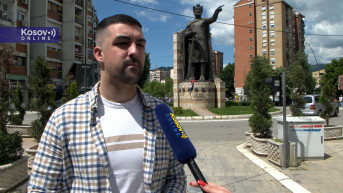
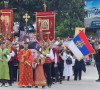
Responding to the ban on using the Serbian flag during the celebration of the city's patron saint, Saint Vasilije Ostroski, in Leposavic, a historian from the Faculty of Philosophy in North Mitrovica, Luka Jovanovic, assesses that the Kosovo administration does not know the power of law and therefore does not know the basic norms of respecting minority communities.
Jovanovic states that the two main symbols of Serbs as a people in the past, compared to other states, were the flag and the script, namely Cyrillic. The flag, he adds, as the main symbol of the Serbian nationality, has often been the first target when the Serbian people were under attack.
"We could see in our modern history, especially in the last two centuries, that every time the Serbian people found themselves under occupation or faced potential extermination, expulsion, or destruction in a territory, their script and flag were the first to be banned. In this case as well, we can see that Serbian script is accepted as equal according to the so-called Kosovo constitution, but it is not actually applied anywhere, it is even banned, meaning we cannot see Cyrillic in official documents, not even the Serbian language written in Latin script. So, we see discrimination towards the Serbian script first, and then discrimination towards the Serbian flag," Jovanovic says.
He adds that there should be a distinction between two types of Serbian flags, the Serbian state flag with the coat of arms and the double-headed eagle, and the Serbian national flag used by Serbs in the diaspora, which is accepted by all foreign countries where Serbs live.
"That is the classic Serbian tricolor, however, even such a flag bothers the Kosovo authorities, but not just them, also the international community, thus, it is a symbol of prohibition and discrimination in Kosovo and Metohija," our interviewee assesses.
The recent example in Leposavic, he says, is a glaring example showing that a people who are the majority in their municipality do not have the right to express their national sentiments guaranteed not only by law but also by general international acts.
"However, we could see that every violation of the law and every violation of international norms in Kosovo and Metohija is actually synonymous with this so-called state. The Albanian side widely violates its constitution, and not only its constitution but also every international document and every international commitment it previously made. Such an impression arises that the Kosovo administration is unaware of the power of law, the power of rights, and therefore does not know the basic norms of respecting minority communities on its territory, which it considers independent," Jovanovic says.
On the other hand, he gives the example of the Republic of Serbia, where minority communities, as he notes, have all their rights fulfilled.
"They are gathered in their national councils, their national flags are recognized, their national script, education in their language, and a range of other privileges that minorities have in civilized Europe, not only in the European Union, so it is indeed a great paradox that Kosovo, which calls itself the most democratic state in Europe, does not respect the basic democratic rights of minority communities," he notes.
He assesses that the only thing Serbs can do is seek protection from the international community, but they must be aware of the fact "that they are actually seeking a solution to a problem caused by the one who caused the problem."
"We could see in the past three decades that the international community has absolutely no response to all the calls and pleas of the Serbian community in Kosovo and Metohija. The international community is the sponsor of Kosovo's statehood, it is the coordinator of all their plans and the sponsor of all their plans," Jovanovic says.


0 comments