
Jovanovic: Vidovdan unites the religious, historical, and national components of the Serbian people
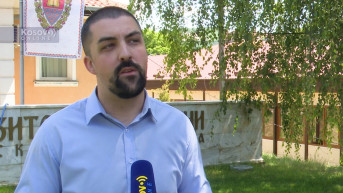
Luka Jovanovic, Assistant at the Department of History of the Faculty of Philosophy, stated that Vidovdan represents “the foundation of Serbian identity,” in which the religious, historical, and national components of the Serbian people are merged.
"Vidovdan is one of the central holidays in Serbian history. In fact, we can freely say that it represents the foundation of the Serbian national myth, the foundation of Serbian identity, where the religious, historical, and national components of the Serbian people come together," Jovanovic told Kosovo Online.
He reminded that Serbs remember Vidovdan for numerous important events, which gained prominence in the Middle Ages.
"Although the most recognizable Vidovdan is the one from 1389, I believe it's important to point out that Vidovdan in the Middle Ages held significant importance as a folk and church holiday, and in 1389 it gained a national connotation—a strong national imprint reflected in the Battle of Kosovo, in that clash on the Kosovo field between the forces of Prince Lazar and those of Sultan Murad," explained the historian.
He added that the entire myth—actually a multilayered story about a prince who is both saint and martyr, a symbolic place of battle, and a hero who sacrificed himself for the victory and safety of his people—contains clear Christian parallels with Christ who sacrificed himself for mankind.
"This entire myth shaped the later history of the Serbian people, especially during the 19th century—during the national awakening and the creation of a new state. From 1804 to 1918, there was a single goal: the liberation and unification of the Serbian people, with the central ideal being the revenge of the Kosovo heroes, as it was said at the time," Jovanovic explained.
He clarified one of the persistent myths—that Serbian statehood fell with the Battle of Kosovo.
"It did not fall in 1389. It continued to exist afterward. Serbian statehood ended only in 1459 with the fall of the Serbian Despotate. However, the Battle of Kosovo shaped the centuries that followed in Serbian history," Jovanovic emphasized.
He added that the Kosovo myth shaped the art and literature of the time.
"Njegoš’s The Mountain Wreath revolves around Milos’s heroism, Lazar’s martyrdom, the Kosovo myth awaiting its fulfillment—which came in 1912 and 1918," said Jovanovic.
The strong symbolism of Vidovdan was also felt in the interwar period, especially in the arts and sculpture.
Jovanovic highlighted the contribution of Ivan Mestrovic.
"At that time, Mestrovic created, in his famous 'Kosovo cycle,' monuments to Milos Obilic and figures inspired by the poems from the Kosovo, pre-Kosovo, and post-Kosovo cycles," he noted.
He added that in more recent history, Vidovdan was marked by some negative events, and at one point, was entirely pushed aside.
"During the time of the SFRY, it was extremely marginalized in favor of newly introduced state holidays, which had to become central—such as Labor Day. However, with the awakening of national consciousness and the loosening grip of communism, Vidovdan returned and regained its place of honor in the hearts of the people. The state never had to formally declare June 28 as a national or religious holiday—people felt it," Jovanovic stated.
He warned that Vidovdan, especially at the end of the 20th and in the early decades of the 21st century, has become one of the main points of contention for other communities "that do not recognize the Serbian people as indigenous to these lands."
"This is especially evident with the Albanians, who continuously try to suppress the celebration of
Vidovdan, erase the memory, and even compromise the remembrance and the entire historical truth related to the Battle of Kosovo, Prince Lazar, and Milos Obilic. Of course, these are constructions of historical revisionism used for political purposes to weaken the Serbian national epic in the territory of Kosovo and Metohija," Jovanovic argued.
He specified that the main goal is to weaken and discredit the Serbian memory of June 28, of Gracanica, Gazimestan, or the Patriarchate of Pec.
"We’ve seen in the media that Albanian historians are trying to present the Battle of Kosovo as a struggle of the Albanian people against Turkish invaders, and even portray Milos Obilic as an ethnic Albanian who ‘had the courage to resist’ and deliver the final blow to Sultan Murad. There is absolutely no basis for such claims in historical facts or sources. The truth about the Kosovo myth, the truth about Vidovdan, is clear—and unchangeable for the Serbian people," Jovanovic concluded.


0 comments