
Kabasic: Data on war damage is incomplete, forcibly displaced Serbs have not provided statements
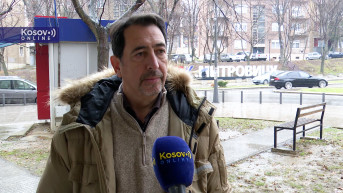
Former judge of the Higher Court in Kosovska Mitrovica, Nikola Kabasic, tells Kosovo Online that the statistical data collected in the census about the extent of the war damage suffered by households in Kosovo is incomplete because it lacks information on members of the Serbian community and other non-Albanian communities who lived in Kosovo before 1999.
"More than 240,000 Serbs, Montenegrins, and other non-Albanians were expelled from Kosovo from 1999 to 2004, when there was another wave of violent expulsion from Kosovo, and they did not have the opportunity to express their opinions about the damage they experienced. The greatest destruction that the Serbian community suffered occurred from June 1999 to the end of 2000, when all of Metohija was expelled from cities, so these data are incomplete," Kabasic said.
He says that he cannot assess whether the data collected, which estimates the war damage to be more than five billion euros, are realistic, as the questions in the census were posed in such a way that citizens themselves chose the option whether the estimated damage was up to 10,000 euros, greater than 40,000 euros, and so on.
"I believe these are large figures because they were coming out with damage estimates of two billion euros in 2017. Also, this is only about material damage related to the population, and it does not take into account infrastructure, industrial facilities, means of communication, railways, roads, bridges, and the like. I assume that after this first phase, in which the data were statistically presented, there will likely be a second phase for more thorough determination, and that they will go from household to household to look for evidence. It should be material evidence that proves someone had certain property, that it had a certain value, and that it was destroyed during armed conflicts in Kosovo and during NATO's aggression against the Federal Republic of Yugoslavia. Or, as is the case everywhere in Kosovo, it will probably be proven with the help of two witnesses, as many court proceedings are conducted," Kabasic explained.
He adds that the issue of war reparations that Kosovo is seeking from the Republic of Serbia has often been raised in Kosovo over the last two decades, mostly motivated by political goals, as a mechanism to pressure Serbia to extract other solutions.
Our interlocutor points out that some citizens have already attempted to seek compensation for the damage they suffered in court.
"The population had the opportunity, and they individually sued the Republic of Serbia in the Kosovo courts for compensation for the damage they suffered during the armed conflicts, but the courts in Kosovo have regularly rejected these cases since 2015, and this even reached the Constitutional Court of Kosovo, which also rejected such cases on the grounds that the Republic of Serbia cannot be sued in those courts. I am also aware that the Humanitarian Law Center from Belgrade and some private lawyers represented individual Albanians who suffered material damage in the courts of the Republic of Serbia in Belgrade, and some of them were successful in those cases, or it was like in the case of Bogujevci for non-material damage," Kabasic said.
Speaking about whether the material evidence needed to prove war damage exists even after 25 years, he says that evidence includes videos and photographs, and that the internet is full of such materials, whether citizens filmed their property before, during, and after the conflict, or in relation to what happened after the arrival of international forces.
"A lot of this has been documented, and they will use it. The Republic of Serbia should not be naive and complacent and say that any lawsuit will not succeed because Kosovo is not a state and is not a member of the United Nations, so it cannot sue the Republic of Serbia before the International Court of Justice. Serbia should not sit idly by but should document the damage it has suffered as a state, I mean the significant property it had in Kosovo, as well as the property of all citizens who were forcibly expelled from Kosovo. That evidence exists, and where it does not exist, it will likely be pursued indirectly with the help of witnesses who will confirm that someone had certain property and that it was destroyed during the war," Kabasic emphasized.


0 comments