
Korkodelovic: Turkey played the key role in Sudan's recognition of Kosovo’s independence
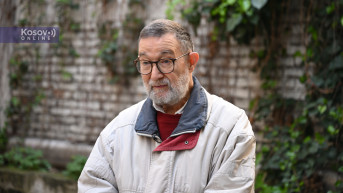
Foreign policy analyst Borislav Korkodelovic believes that the circumstances surrounding Sudan’s recognition of Kosovo’s independence are unusual and that Turkey played the key role in the process. He notes that such a diplomatic success is significant for President Recep Tayyip Erdoğan, especially among his Islamist followers.
Korkodelovic explains that Sudan is one of Africa’s largest countries—third in size—and will celebrate 70 years of independence next year. Ironically, he adds, Sudan itself experienced a partition in 2011 when South Sudan broke away after decades of rebellion.
He emphasizes that a civil war is raging in Sudan, and the outcome remains uncertain, raising questions about whether a future government would uphold the current policy.
“There is a government headed by the former head of state, who remains the head of state, and that government has a representative at the United Nations. But the civil war is ongoing, and we don’t know how it will end. It’s very possible that after its conclusion, Sudan could face further fragmentation. There are at least five separatist movements alongside the civil war. It’s a huge mess, as one Arab journalist put it. The foreign minister and the entire government are technically in resignation, and it remains unclear whether a new or interim government will be formed—and whether such a government would continue the same policy. The country is deeply divided,” Korkodelovic said.
He pointed out that Sudan’s recognition of Kosovo took place at the Antalya Diplomacy Forum, but the setting itself does not seem typical for the conclusion of a valid intergovernmental agreement.
“I don’t know whether it’s legally disputable, but the circumstances are certainly highly unusual. Sudan abandoned its long-standing policy, shaped by its own bitter experience in 2011 when it lost South Sudan following Kosovo’s unilateral declaration of independence. What’s interesting is the role Turkey played as host of the forum, and the fact that Sudan’s foreign minister publicly thanked Erdoğan for enabling the signing of such an agreement with Kosovo’s interim institutions,” he stated.
Korkodelovic believes that the recognition is part of a broader geopolitical game involving major global powers and that Turkey ultimately played the leading role—something that could politically benefit President Erdoğan.
“The backdrop is the weakening position of General Burhan’s central government. Recently, there were intense battles in parts of Khartoum, the capital. It’s a city of ten million people devastated by two years of civil war. While Burhan may have had some military successes, that doesn’t mean much. He is backed by Egypt, while the rebels are supported by the UAE. Saudi Arabia also exerts significant influence. Turkey has historical interests—it ruled Egypt and thus Sudan in the 19th century. Russia seeks a naval base in Sudan. The country is of exceptional strategic importance because it lies on the Red Sea. The interests of major powers—USA, Russia, China—as well as regional ones like Iran, Turkey, and Saudi Arabia, all converge there,” Korkodelovic explained.
He concluded that, after two years of war, Sudan’s central government must make certain concessions.
“Turkey, as an influential player, in my view played the decisive role in the end. That can only strengthen Erdoğan’s position, especially as he faces domestic unrest. This kind of diplomatic success—one that can be credited to Turkey—means a lot to Erdoğan’s supporters, particularly among Islamists. Sudan is a predominantly Islamic country, and this move could carry political weight,” Korkodelovic concluded.


0 comments