
Kostic: The Djuric–Rubio meeting may strengthen Serbia’s negotiating position in the Dialogue with Pristina
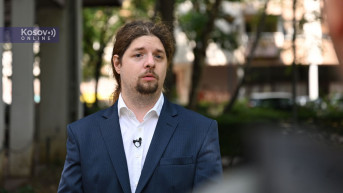
Mijat Kostic from the organization New Third Way emphasized that the meeting between Serbia’s Foreign Minister Marko Djuric and U.S. Secretary of State Marco Rubio is an important moment and that improved relations may enhance Serbia’s negotiating position in the Belgrade–Pristina dialogue. He added that U.S. officials would now hear firsthand Serbia’s official position on the Serbian community in Kosovo and on the Community of Serb Municipalities (CSM).
Speaking to Kosovo Online, Kostic also said that the Djuric–Rubio meeting is an indicator that U.S.-Serbia relations are improving and being elevated to a higher level.
“What both Rubio and Djuric announced is that a strategic dialogue will be launched this year, with key topics being the economy and security. Therefore, we can expect strengthened cooperation, including increased U.S. investments, possibly the arrival of American companies here—and ours in the U.S. But perhaps most importantly, there will be cooperation in the area of security. Both parties emphasized the need to preserve peace in the region, which may relate not only to the issue of Kosovo and the Republic of Srpska, but also to broader military and police cooperation and the security sector in general,” Kostic stressed.
He also noted that this was an introductory meeting between the two diplomats, but that the forthcoming strategic dialogue could bring more concrete provisions.
He emphasized that, although the meeting was largely symbolic, it marked the opening of a new chapter in U.S.-Serbia relations.
“No documents were adopted at this meeting—it was merely a statement of intent to continue cooperation, especially in economic and security areas. Still, the symbolic importance lies in the fact that Serbia now has an opportunity to, in a way, rebuild its relationship with the U.S. from the ground up. This is particularly relevant since the Trump administration is open to some non-traditional forms of cooperation. In previous years, U.S. foreign policy aligned completely with the EU’s, but in the near future that may no longer be the case. If spheres of influence begin to diverge—with Europe and the U.S. becoming separate spheres—this could benefit Serbia, as it might count on the U.S. as an ally regardless of its relations with the EU and the European integration process,” Kostic explained.
He recalled that when it comes to Kosovo, there is a clear continuity in U.S. foreign policy, and that it would be unrealistic to expect any tectonic shifts, such as the U.S. changing its position on Kosovo.
“We remember that Trump once announced withdrawal from NATO and pulling troops out of Europe—but that didn’t happen. There may have been some illusions, even about Bondsteel, that U.S. troops would leave the base in Kosovo, but that’s highly unlikely—especially after the recent NATO summit in The Hague, where the U.S. once again clearly reaffirmed its commitment to the alliance. What could be important now is that U.S. officials will hear directly Serbia’s stance on the Serbian minority in Kosovo and the CSM, which still hasn’t been formed. This improvement in relations could enhance Serbia’s position in the Belgrade–Pristina dialogue and improve the situation on the ground if there is greater openness to potentially non-traditional deals—economic and political—that could benefit Serbia,” Kostic concluded.



comments