
Kreca: The UN Security Council Resolution 1244 is Serbia's irrefutable argument in the negotiations on Kosovo
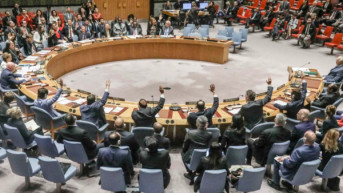
International law professor, Milenko Kreca assessed that in the negotiations on Kosovo, the UN Security Council Resolution 1244 was Serbia's irrefutable argument, Politika writes.
Kreca stated that, in addition to the UN Security Council Resolution 1244, the Charter of the United Nations, the Brussels and Washington agreements were also key arguments.
"Serbia's legal position in the negotiations is well founded on the UN Resolution 1244, which was adopted based on Chapter 7 of the UN Charter (Threats to peace, breaches of the peace and acts of aggression). These resolutions are, in fact, decisions by their strength, since according to Article 24 of the Charter, the members of the UN agreed that the Security Council acted on their behalf in the implementation of its duties to achieve peace and security, and according to Article 25, they had undertaken to "accept and implement the decisions of the Security Council". Therefore, it can be said that the UN Resolution 1244 was an irrefutable argument," Kreca said.
According to him, the advisory opinion of the International Court of Justice since 2010 did not change anything for two reasons, formal and substantive.
"As far as the formal court is concerned, the International Court of Justice is not authorized to exercise judicial control over the acts of the Security Council, especially the decisions made based on Chapter 7 of the Charter. From a substantive point of view, the opinion of the Court does not touch the essence of the matter but represents an abstract answer, a sophistical construction. Namely, it finds that "general international law does not contain an applicable prohibition of the Declaration of Independence", without establishing who its author was. The opinion states that in the authentic text of the Declaration, in the Albanian language, nothing refers to the Assembly of Kosovo as its author, that the language of the Declaration differs from the language that is used in the acts of the Assembly of Kosovo, just as the procedure for adopting the Declaration differs from the usual legislative procedure in the Assembly of Kosovo. The Declaration was not sent to the special representative of the Secretary-General for publication in the "Official Gazette", so it was not even published. The silence of the special representative about the Declaration suggests, as stated, that he did not consider the Declaration of the Provisional Institutions of Self-Government", Kreca explained.
As he added, calling for mutual recognition between Kosovo and Serbia had a hidden message, to put Serbia and Kosovo on the same level.
"Even though eventual mutual recognition would be legal nonsense because recognition in international law is reserved for newly created states, it would produce far-reaching negative consequences. Calling for mutual recognition has a hidden intention - to put Serbia and Kosovo on the same level, as two new states created on the same wave of territorial changes that affected SFRY. Two circumstances could be abused in the manner of general instrumentalization of facts and rights of foreign actors for the sake of Kosovo's independence. The first is that Kosovo, after the impromptu referendum on independence in 1990, organized by the Democratic Alliance of Kosovo, which Serbia declared null and void, declared independence, which was recognized only by Albania. Another circumstance is that by submitting an application for admission to the UN in October 2000, the FRY renounced continuity with the SFRY and accepted the status of the successor state of the SFRY, i.e. a new state," he said.
Kreca emphasized that the consequences of recognizing Kosovo for Serbia would be multiple.
"First of all, it would mean renouncing a part of the state territory, depriving the object of the UN Resolution 1244, which would lose its legal meaning, as well as the validation of the illegal declaration of independence, because the recognition has a retroactive effect, and the release of the responsibility of Kosovo and foreign actors based on the subsequent consent of Serbia as the injured party", Kreca said.



0 comments