
Krga: The Kumanovo Agreement brought peace, but 26 years later, Serbs in Kosovo remain without protection
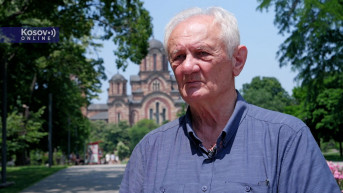
Former Chief of the General Staff of the Yugoslav Army and one of the participants in the negotiations on the Military-Technical Agreement in Kumanovo in 1999, General Branko Krga, stated to Kosovo Online that the key benefit of this document was the end of the war. However, even today, 26 years later, the Serbian community in Kosovo remains in a very difficult position and without substantial protection from the international community.
Recalling the negotiations in Kumanovo, Krga says they resulted in a document that had both positive and negative aspects.
"The only positive aspect is that the war was stopped. Through this agreement, the war was halted, and the killing of innocent civilians, soldiers, and police officers ended. The negative side is that the agreement was not consistently implemented, many of its provisions were not fully enforced," Krga said.
He emphasized that the Kumanovo Military-Technical Agreement explicitly states the obligation of KFOR to disarm members of the KLA and other armed groups, and then to ensure the return of all displaced persons, especially Serbs.
"Not only were they not returned, but they were additionally expelled. This is still happening today," Krga noted.
He also pointed out another unfulfilled obligation from the agreement: the return of the army and police under the terms agreed upon was not enabled.
He revealed that the negotiations in Kumanovo lasted five days because NATO initially refused to allow a corresponding UN Security Council resolution to be adopted following the agreement.
"They wanted to convince us to accept the agreement without their obligation to pass a resolution concerning the territory of Kosovo and Metohija, and without verifying the document through a Security Council resolution. We were adamant that we would not accept it without agreement on adopting a resolution. Once that was agreed upon, and they accepted it, some remaining technical issues regarding the size of the security zones were quickly resolved, and the agreement was reached," Krga said.
When asked where Kosovo stands today, 26 years later, the former Chief of the General Staff responded that the answer depends on the perspective from which the issue is viewed.
"From Serbia's standpoint, there should be absolutely no doubt, Kosovo is an integral part of the Republic of Serbia. Resolution 1244 explicitly confirms this. It provides for substantial autonomy and self-governance for Kosovo, and this is something our diplomacy, politics, and media should consistently emphasize. We have an absolute legal basis to insist that Kosovo be returned to the constitutional and legal system of the Republic of Serbia. Of course, reality is somewhat different," Krga emphasized.
He added that 26 years later, the position of the Serbian community in Kosovo is increasingly unbearable.
"We see how the Pristina authorities treat the Serbian people, especially now in northern Kosovo, where it is almost unbelievable, they are being driven out of their homes, and some institutions of a civil, humanitarian nature are being shut down. This violence is not condemned by those responsible for doing so, namely, the international actors: UNMIK, KFOR, EULEX," Krga concluded.
0 comments