
Kumanovo Agreement 24 years later: Kosovo problem far from resolved, KFOR strengthens its forces
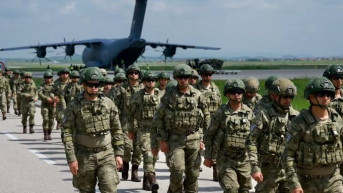
On this day, 24 years ago, the Military-Technical Agreement was signed in Kumanovo, which ended the NATO bombing of the then FR Yugoslavia, and the Yugoslav forces withdrew from Kosovo. The provisions of the agreement were included in Resolution 1244 of the United Nations Security Council, which was adopted a day later, on June 10.
Even after almost a quarter of a century, the solution to the Kosovo problem is not in sight, and the latest crisis in the north caused by the violent actions of Albin Kurti, the invasion of Kosovo Special Forces into municipal buildings, and the imposition of illegitimate Albanian mayors showed the need for the continued presence of international forces in order to preserve the peace and security of the Serbs, who live in that area, the interlocutors of Kosovo Online indicate.
The military-technical agreement between the International Security Forces (KFOR) and the governments of the former Yugoslavia and Serbia was signed at the military airport near Kumanovo, after 78 days of NATO bombing of the FRY and five days of negotiations. It was signed by General of the Yugoslav Army Svetozar Marjanovic, General of the Ministry of Internal Affairs of Serbia Obrad Stevanovic, and British General Michael Jackson.
The document foresaw the deployment of an effective international civilian and security presence in Kosovo and Metohija, under the auspices of the United Nations, after the adoption of the UN Security Council resolution. According to the Agreement, international forces "are authorized to undertake all necessary actions in order to establish and maintain a safe environment for all citizens".
In the beginning, the KFOR Mission numbered around 50,000 members, but today it is 14 times smaller, with around 3,700 soldiers. After the outbreak of the last crisis in the north, NATO decided to reinforce KFOR with at least 700 soldiers whose deployment is ongoing. For official Belgrade, KFOR is the only guarantor of the security of the Serbs in Kosovo.
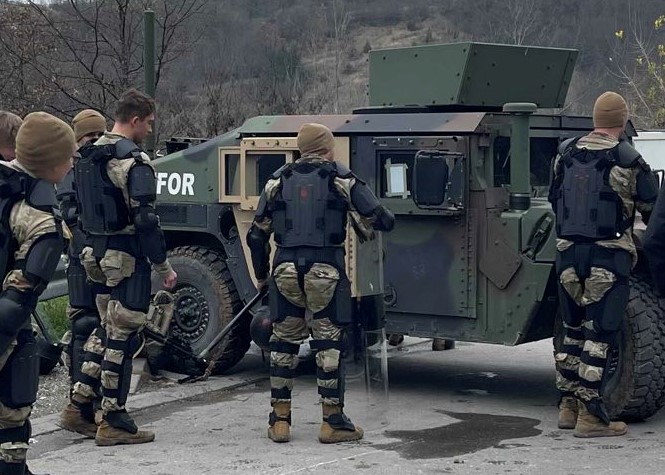
General Obrad Stevanovic, who was one of the signatories from the Serbian side of the Kumanovo Agreement, tells Kosovo Online that even though the Military-Technical Agreement and even Resolution 1244 of the UNSC are not in their content and essence what Serbia would like the most, those two documents even today, represent a key support and stronghold for the defense of Kosovo as part of Serbia and for the survival of the Serbs in Kosovo.
"In that sense, those two documents have not lost their importance even today, although they are rarely mentioned, one might say they are marginalized, primarily by people from the international community. On the other hand, KFOR, whatever it was and however behaved now, is still a key force in Kosovo and Metohija, which has both the mandate and the responsibility to ensure a safe environment for all citizens and their normal life and above all for those who are at risk, namely the Serbs," Stevanovic says.
In this regard, he points out, the commander of KFOR has incredibly large powers even today, but the only question is whether he wants to use them and whether, under the influence of great powers, he does not use any of those powers when it is obvious that he should.
"One of those powers, particularly important, is prescribed by point 5 of Annex B of the Kumanovo Agreement. That point expressly stipulates that the commander of KFOR is authorized to take all measures, when he judges that the safety of anyone in Kosovo and Metohija is threatened, on any basis, and even to use force. He has the right to remove any forces that threaten anyone's safety in any way from any point in Kosovo," our interlocutor points out.
Although some Western countries demand that KFOR withdraw completely from Kosovo and leave security to Kosovo forces, General Stevanovic says that the latest crisis in the north of Kosovo has shown that such a thing would have serious consequences for peace in the entire region.
"According to Resolution 1244, the mandate of KFOR is unlimited. Those forces can only be withdrawn if the Security Council decides to do so, and unanimously so that none of the member states vetoes. Which means that without the consent of Russia and China, it is impossible to abolish KFOR," Stevanovic says.
He points out that these forces, since their arrival in Kosovo, failed or did not want to or could not implement some of the key obligations they had undertaken.
"One of them is to create a safe environment in the entire territory of Kosovo and Metohija for the normal and safe life of all citizens and the normal functioning of all institutions. We believed that they would fulfill that mandate, but unfortunately, they disappointed us because immediately after entering instead of taking care of endangered Serbs, they celebrated friendship with the KLA more than they dealt with their mandate. Of course, later they did not allow our forces to return, even though that possibility is also provided for in Resolution 1244," he says.
However, he continues, despite all those failures, and problems in the implementation of the agreement, Serbia and the Serbs have no other forces that could protect the security of the Serbs in Kosovo and Metohija.
Regarding the reinforcement of the KFOR forces with 700 additional soldiers, Stevanovic says that this is a logical decision after the latest events in the north caused by the violent actions of Pristina.
"In Kosovo, the situation is clearly getting more complicated and a spark is about to start a big fire. They are certainly aware of their responsibility and obligation to prevent something like that from happening. On the other hand, they are certainly under pressure from their countries to exercise restraint even in solving that problem that threatens to grow into a fire. However, with all these problems, we have no one else we could rely on more seriously at this moment," the general said.
He adds that even today, KFOR has the option of deploying forces from non-NATO member states. He recalls that in the beginning there were also soldiers from Russia, Ukraine, and Jordan.
"In this regard, we should never forget that KFOR forces are UN forces, not NATO. It is 'de jure' so, of course, we 'de facto' see that KFOR troops come from the countries of the Alliance. But, the address for solving the problem in relation to KFOR is not Brussels, but the UN. The commander of NATO is not superior to the commander of KFOR, but according to Resolution 1244, he answers to the UN Security Council, and not to the head of the Alliance in Brussels," Stevanovic points out.
And the former president of the Executive Council of Kosovo and Metohija, Zoran Andjelkovic, says that after the last events in the north, we have witnessed that even after 24 years, KFOR is necessary for Kosovo and Metohija.
"Without the presence of KFOR, with all the objections we have, it is quite certain that the various temporary authorities in Pristina even before 2008, and after that, and especially with the arrival of Kurti, would have achieved their key goal - the complete expulsion of the Serbs from Kosovo. Therefore, with all the objections to KFOR, their presence at Kosovo and Metohija proved to be extremely useful," Andjelkovic says.
He reminds that the Kumanovo Agreement is the forerunner of Resolution 1244.
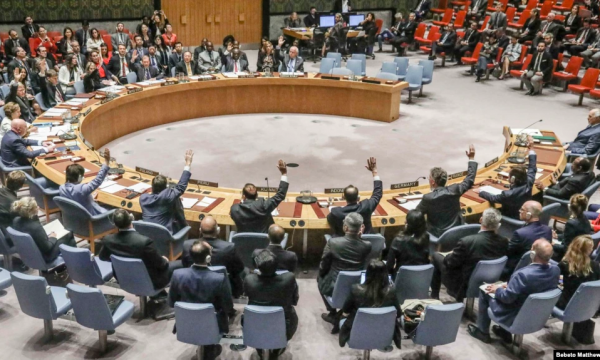
"The NATO bombing lasted until the signing of the Kumanovo Agreement. This was a prerequisite for the adoption of Resolution 1244 in the Council of Ministers. And that created the conditions for us to continue to fight today, 24 years after the bombing, to preserve Kosovo and Metohija as part of Serbia, which was guaranteed by Resolution 1244. Because they failed to completely separate Kosovo and Serbia from Serbia," Andjelkovic says.
The West, he says, has been reducing the number of KFOR soldiers over the past years, thinking that they have established a "democratic government in Kosovo".
"And now we have seen what kind of democratic creation it is that is still trying after 24 years to ethnically cleanse Kosovo. KFOR and NATO have also seen it, and are now sending an additional 700 soldiers to Kosovo. For the Serbs in this situation, it is more important to have more KFOR members, and it is important for Serbia to continue the fight for the preservation of Resolution 1244, which would not have existed without the Kumanovo Agreement," Andjelkovic concludes.
Former Prime Minister of Serbia and member of the delegation at the negotiations on Kosovo in Rambouillet, Nikola Sainovic, reminds that the negotiations regarding the Kumanovo Agreement lasted four days and nights and that it is part of the "package of documents" in which Resolution 1244 is the key.
"NATO did not want to enter the territory of Kosovo until we withdraw. We said that this would create a security vacuum that would be used by the KLA, and Ahtisaari finally accepted that the agreement states the handover of zones, that is, that our forces leave, as the UN forces enter, and in that way, they take responsibility for the safety of our residents, but also the blame in the case of violence against the population," Sainovic says.
According to him, in that example, America showed that it "invented a new weapon called a peace agreement, because with it you can do what you can't do by entering a territory with a weapon."
"You conclude a peace agreement and the next day you break it yourself, and then the violation continues, so with the presence of 50,000 KFOR members, unprecedented persecution of the Serbs occurred in 2004, the same continued with the verification of Kosovo's independence in 2008, then the Brussels Agreement is also violated, and that is why the crisis and it's still ongoing. And it's not only here, the same was shown through the violation of the Minsk agreement, which was confirmed by Angela Merkel, who stated that the agreement was a hoax in order to gain time to arm the Ukrainian forces, and the same was done with Daruvar Agreement and the arming of Croatian forces," he says.
He also points out that he brought a verdict from The Hague in which it is written that the Yugoslav delegation was not to blame for the collapse of the negotiations in Rambouillet, and that was the ultimatum for the bombing.
"In the past, peace agreements were sacred, like Versailles or after the Second World War, and they brought peace and were respected. So either we will respect what was agreed or we will have a constant crisis, the consequences of which will be suffered by the Serbs and Albanians, not them across the ocean," Sainovic says.
A day after the anniversary of the adoption of Resolution 1244, a two-day NATO summit begins in Vilnius, Lithuania on June 11. One of the key topics, as announced, will be the importance of KFOR's presence in Kosovo.


0 comments