
Krstic: Adoption of tougher measures against Serbia unrealistic, several EU countries would oppose it
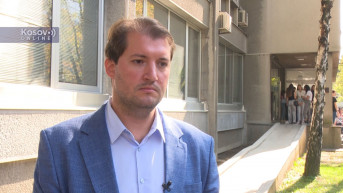
Milan Krstic, an associate professor at the Faculty of Political Sciences, assessed for Kosovo Online that the adoption of measures against Serbia, as requested by some EU countries and the region, was unrealistic. He says that even if some penalties were introduced, they would be "far from the sanctions of the 1990s."
Krstic said that discussions on measures against both Belgrade and Pristina could take place at today's summit of leaders of the European Political Community in Granada, Spain, attended by Serbian President Aleksandar Vucic and Kosovo President Vjosa Osmani, as the European Parliament has called on the European Union to adopt measures against both sides to encourage dialogue.
"However, I believe that the perspective of adopting any punitive measures against Serbia is quite unrealistic at the moment because I believe that several EU countries would oppose it. The reason for this is that the EU, as a dialogue facilitator, has a delicate position that implies not pushing hard at this moment, which is very fragile and where it is possible that the situation could further destabilize due to any tough measures that could deteriorate trust between Belgrade and Pristina," Krstic explained.
He believes that even if there were any punitive measures, they would focus more on some form of diplomatic sanctions, similar to those currently applied to Kosovo Prime Minister Albin Kurti.
"They could possibly involve suspending some forms of assistance while indicating that the EU accession path is frozen until further notice. Any sanctions resembling those from the 1990s or those currently applied to Russia are absolutely out of the question. The first, more limited measures are possible, but only if there are new escalations," Krstic noted.
He explains that the European Commission can initiate some punitive mechanisms independently of the EU Council's decision, which are limited, adding that there is no possibility for stricter sanctions because they are introduced by the Council.
"The European Commission can impose restrictions on economic aid programs, which is possible to happen. However, due to the diplomatic and political processes I mentioned earlier, I don't believe they would resort to this measure. It will be more like a kind of call or, perhaps, a threat that if such a situation occurs again, these measures could be implemented," Krstic emphasized.
Krstic believes it is unnecessary to discuss the revocation of visa liberalization, which is also mentioned as a possible measure at this time.
"This measure could occur for other reasons. There have been situations where it was said that it could come under review, but for other reasons, such as the entry of third-country nationals into Serbia who are not on the EU visa liberalization list, such as citizens of Cuba or India. This measure may also be related to the high number of asylum seekers. Serbia has harmonized its regulations, and we do not have a large number of asylum seekers. These are topics mostly related to internal affairs," Krstic said.
He emphasizes that the EU rarely used this instrument as a political tool.
"There have been exceptions, such as in 1992, the isolation of the Federal Republic of Yugoslavia. But really, we shouldn't draw parallels with the 1990s; this situation is far from that," Krstic concluded.
0 comments