
Krstic: An agreement can be reached regarding the CSM, but implementation is difficult because Pristina is hindering it
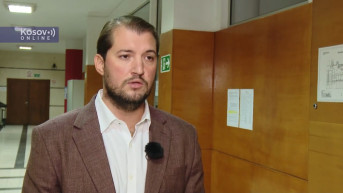
Milan Krstic, a lecturer at the Faculty of Political Sciences, believes there is room for compromise regarding the formation of the Community of Serb Municipalities, as well as for implementing the principles from 2015 with amendments to the Constitution of Kosovo or a broader interpretation of certain provisions. He emphasizes that reaching an agreement is easier than its implementation because it requires Pristina's willingness to establish the CSM.
In response to messages from Brussels suggesting a balanced model for forming the CSM, Krstic told Kosovo Online that the specific content of the CSM statute draft at this moment can only be speculated from statements we have heard from officials in Belgrade and Pristina in recent days.
"President Vucic stated that the draft statute contained most of the things previously agreed upon. Whether this means there is something not included remains to be seen. It would likely have been stated if everything were included. Likewise, if it were a balanced approach, as the EU emphasizes, if everything Beograd demands were included, it would likely mean that Pristina views it as unbalanced," Krstic said.
He points out that when it comes to Pristina, they demand that everything adopted be in line with the decision of the Constitutional Court of Kosovo, which declared some provisions or aspects of the 2015 agreement unconstitutional.
"Of course, there is room for compromise. There is room for the 2015 provisions to be implemented with amendments to the Constitution of Kosovo or with a broader interpretation of certain provisions. I believe this is how the issues or conflicts of opinion will be resolved in this statute proposal. I believe there won't be a departure from the fundamental principles. So, what Albin Kurti proposed in the past, which was actually a departure from the 2013 and 2015 agreements' foundations, is unlikely to be part of the agreement, based on everything Belgrade clearly stated it would accept or not accept, and what the international community emphasized must be implemented," Krstic noted.
Regarding the mention of European models that could be applied to the CSM, Krstic says there are various examples of territorial autonomy functioning in Europe, but each of them has been applied in different contexts and circumstances, such as South Tyrol, the Aland Islands, or certain regions in Spain.
"The Community of Serb Municipalities should actually represent the consolidation of existing Serbian authorities through local self-government, along with the addition of certain elements of self-governance. And, of course, most importantly, linking all of that to Belgrade or to the functioning of the institutions of the Republic of Serbia. How much will be added, whether these things will be executive, and how financing will be carried out in practice remain to be seen. In that regard, this is an exceptional context, but unfortunately, I don't think any proposal currently adopted can reach the level of significant self-governance that exists in the cases I mentioned, which I believe is necessary for the survival of the Serbian community in Kosovo. But it doesn't seem like any proposal will move in that direction," our interviewee said.
When asked whether the fact that the parties have not rejected the EU proposal regarding the CSM is a good sign for further negotiations or whether it is a result of significant pressure faced by both Belgrade and Pristina, showing at least a minimum of goodwill and not sabotaging the continuation of dialogue at this stage, Krstic believes that both aspects are at play.
"I believe that one step forward will be taken, as it was done in Brussels and Ohrid in terms of formal discussions and progress in dialogue. On the other hand, when it comes to implementation, I believe there will still be hindrances, primarily from Pristina, as it has been doing so far. Now, Belgrade is under pressure due to Banjska to make concessions as well. So, maybe it's easier to reach an agreement, but for its implementation, Pristina definitely needs to decide to form the CSM. I don't think that will happen soon. There will probably be some progress, entering the formation process, and then we'll get stuck on something similar in a month or two again," Krstic concludes.



0 comments