
Kurti: The Serb List is "very problematic," our MPs in the CEC could not have had a different stance

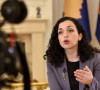
Today, regarding the CEC's decision not to certify the candidates of the Serb List for the parliamentary elections, on the initiative of members from the Self-Determination Movement, Kosovo Prime Minister Albin Kurti stated that the Serb List is "very problematic" and that the stance of his party's MPs could not have been different. Regarding the attack on the Ibar-Lepenac canal, he said that Milan Radoicic was behind it, financed by Serbia.
Kurti, at an emergency press conference, stated that the Serb List had been "very problematic" even before the Banjska attack, claiming that its leaders still receive orders from Milan Radoicic.
"Let us not forget that the Serb List was very problematic even before the terrorist attack in Banjska. The situation escalated when, on Belgrade's orders, they submitted resignations in the prosecutor's office, judiciary, local municipalities, and the Assembly of Kosovo, on November 5, 2020. And when we add the terrorist attack in Banjska carried out by the deputy leader of the Serb List Milan Radojicic, who is still 'de facto' the head of the Serb List, as its exponents meet with him in Serbia, receive orders from him, it is clear that our stance, as Self-Determination, could not have been different," said Kurti.
He noted that Kosovo lost police officer Afrim Bunjaku, while Milan Radojicic is at large in Serbia and, according to Kurti, "planning new attacks, some of which he is carrying out."
"The destructive actions and obstructions of the Serb List towards Kosovo are, unfortunately, well-known to everyone. The Serb List is a loyal branch of the ruling party in Serbia and their boycott of the Kosovo assembly began with that order from Belgrade," said Kurti.
He added that the Serb List does not represent a political organization of Serbs.
"However, it is Belgrade's dictate over the Serbs in Kosovo, by imposing Milan Radoicic at the head of this party. The Serb List has never distanced itself from the attack in Banjska. The Serb List will be Radoicic's political wing," said Kurti.
Referring to information he said security institutions possess, he stated that Radoicic was behind the attack on the Ibar-Lepenac canal, adding that "Serbia is responsible for planning, financing, and logistics of the attack."
He emphasized that the terrorist group, which carried out the attack, aimed to paralyze the economic life and energy supply in Kosovo.
"The explosive attack on the Ibar-Lepenac canal on November 29, which destroyed the aqueduct, was intended to paralyze the economic and energy life in Kosovo, as well as to provoke unrest that would endanger the national security of Kosovo and the region," said Kurti.
He accused Serbia of continuing to wage a hybrid war against Kosovo through various attacks, mentioning Banjska and the Ibar-Lepenac canal in this context.
Kurti added that Belgrade's refusal to hand over Milan Radoicic encourages the terrorist group to continue other acts against the territorial integrity and sovereignty of Kosovo.
He highlighted that Radoicic, who is considered the leader of the group that carried out the attack on Banjska last September, has two other people working for him and carrying out attacks in northern Kosovo.
"The situation in the four municipalities in the north gradually escalated through small groups associated with Milan Radoicic. According to information possessed by security institutions in Kosovo, Radoicic designated two people close to him to carry out attacks in the north, who also participated in the terrorist attack in Banjska, and are in Serbia. These two people are Nemanja Radivojevic, known by the nickname 'Gandi', and Vladimir Radivojevic, known as 'Mami'," explained Kurti.
He added that Radoicic planned the attack, and two groups within the "Civil Protection" terrorist organization financed by Serbia were involved in its execution.
"The first group provided logistical support on the ground, the second involved several experts, among them people from Serbian security structures close to Radoicic, participated in carrying out the attack. These two groups were previously continuously trained in Serbia and after the attack on Banjska. So far, encrypted communications between several members of the 'Civil Protection' terrorist organization connected to the case have been identified. Data are being processed by security institutions for ongoing investigations," said Kurti.
He added that Radoicic undertook certain actions in an attempt to justify himself.
"On the day of the attack, he met with members of the Serb List, two hours before the attack on the Ibar-Lepenac canal. After the attack, he phoned, met, and spoke with high state structures in Serbia and undertook various fabricated actions to cover his responsibility. The President of Serbia activated all mechanisms to redirect responsibility to other addresses through creating various conspiracies," claimed Kurti.
Kurti also warned that new attacks are expected "especially before and after New Year's."
"Such methods of challenging Kosovo's security, which result not only in damaging and harming vital infrastructure, inciting inter-ethnic incidents which Serbia strongly encourages, then causing panic among citizens, and finally, creating the image of an unstable country, we expect will be carried out in the near future especially before and after New Year's," said the Kosovo Prime Minister.
Kurti underscored that the security forces are committed to "maximally neutralizing" these methods, despite the fact that such attacks are a challenge even for powerful states.

0 comments