
Latinovic: Putin and Erdogan's good relations influenced the selection of OSCE Secretary-General
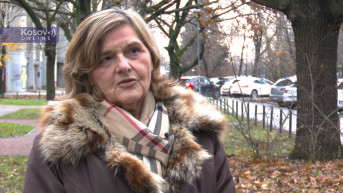
Former Serbian Ambassador to the OSCE, Branka Latinovic, tells Kosovo Online that the appointment of Turkey’s candidate Feridun Sinirlioglu as OSCE Secretary-General and Greece’s candidate Maria Telalian as ODIHR Director reflects an agreement between the Western bloc and Russia. This agreement resolved the long-standing issue of who would assume the Secretary-General role, which required Russian approval.
“While Turkey is a NATO member, I believe that in this case, the good personal relationship between Russian President Putin and Turkish President Erdogan played a decisive role. There may have been some persuasion between them, we don’t know that, but this relationship was undoubtedly a key factor in the selection of the Turkish candidate. Sinirlioglu faces significant challenges ahead. This choice may also be tied to reaching an agreement on the OSCE’s budget, which has been operating on temporary funding for years, with resources 30 to 40% below necessary levels,” Latinovic explained.
Regarding Telalian's appointment as ODIHR Director, Latinovic suggests it should also be viewed in light of Russia’s stance on the role and the relatively amicable relations between Greece and Russia.
However, Latinovic points out that while Sinirlioglu and Telalian are experienced diplomats, neither has a professional background within the OSCE, that is, their diplomatic careers do not indicate prior service in the organization.
Regarding comments that the agreement on the new OSCE leadership signals a rapprochement in Turkish-Greek relations, our interlocutor says that this was certainly part of the deal between Turkey and Greece and a result of their mutual rivalry, as Greece likely did not want to "see" only Turkey securing such an important position but also wanted to secure its own place in the "deal."
“This makes sense at this critical moment for the OSCE, which must overcome its paralysis. However, it is unusual to see bilateral rivalries influence internal organizational appointments, as this could set a negative precedent,” Latinovic noted.
Latinovic emphasizes that the OSCE Secretary-General and ODIHR Director do not have political authority to steer the organization’s operations in the Western Balkans, as these responsibilities fall under the Permanent Council and the Chairperson-in-Office, a role that Finland will assume on January 1.
“The Secretary-General oversees numerous missions in the region, including in Albania, Montenegro, Bosnia and Herzegovina, Serbia, Kosovo and Metohija, North Macedonia, and other areas outside the Balkans. Their task is to ensure missions function smoothly, are adequately staffed, have sufficient funding, and meet their objectives. Meanwhile, the ODIHR Director focuses on monitoring electoral activities, ensuring high-quality coverage, timely reporting to the Permanent Council, and implementing recommendations, if any,” Latinovic explained.
Given that Albania had its own candidate for OSCE Secretary-General, Foreign Minister Igli Hasani, Latinovic observes that while Hasani has OSCE experience, other criteria prevailed during the selection process. Appointments to such high-level roles in international organizations, she says, also consider the country’s overall capacity and contributions to the organization’s work.
“Albania chaired the OSCE but was unfortunate to do so during the pandemic, which limited activities. Circumstances didn’t allow Albania to make a stronger impact, although it certainly intended to, as evidenced by Prime Minister Rama’s programmatic speech at the opening of their term. Additionally, Albania joined the OSCE only in 1991 and was not among the original signatories of the Helsinki Final Act,” Latinovic concluded.


0 comments