
Lukic: Serious problem of witness protection; Special Court is trying to impose joint criminal enterprise on Albanians
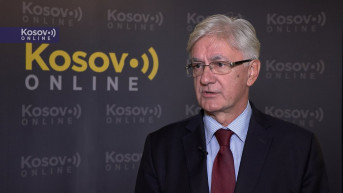
Branko Lukic, a longtime lawyer at the Hague Tribunal and defender of the commander of the Republika Srpska Army, General Ratko Mladic, commenting on the three years since the indictment was raised and the first appearance of Hashim Thaci before the Special Court in The Hague, warns that this court is already facing a serious problem of witness protection, and he notes that there is intention for, after the Serbs, Albanians to be convicted of a joint criminal enterprise.
Lukic suggests giving the Special Court a chance to see how it will conclude criminal proceedings.
"We should give this court a chance to see what and how it will do. The duration of the proceedings is typical for the work of international tribunals, so I wouldn't object on that basis. However, as a problem, I see, and we saw this at the Tribunal that tried crimes in the former Yugoslavia, that in the Haradinaj case, the prosecution was prevented from presenting evidence since more than 40 witnesses were eliminated. We know that a trial was conducted before this Tribunal against Hisni Gucati, who was sentenced to more than four years, and we see that on October 18, he was released on parole. He was providing information about protected witnesses and documents. So, that court failed to protect witnesses. Considering that witnesses were previously killed, this is a significant threat to all witnesses who are supposed to participate in the proceedings against Thaci. Not only is the court fully controlled by the US prosecution, but we also have the fact that the Albanians from Kosovo themselves control, eliminate, or intimidate witnesses. People dare not testify. I think there will be significant problems in Thaci's proceedings. We see that an Albanian, Kilaj, who appeared before the court on November 4, has been arrested again. So, the same practice continues. How will the prosecution be able to present evidence, to prove their guilt, in light of the fact that they are unable to produce witnesses because they have been eliminated or are unwilling to testify out of fear for their families? I see this as the biggest problem in the work of this Special Court for Kosovo," Lukic says, adding that Hashim Thaci's defense is expressing optimism that he will soon be free, convinced that the prosecution has failed to prove any of the indictment points.
Lukic mentions that the release of Hisni Gucati on parole, who was definitively sentenced to 4.3 years in February of this year precisely for the criminal act of revealing the identity of potential witnesses in processes before the Special Court, surprises him.
"He returned to Kosovo as a repentant. However, I don't believe he will stop doing what he has already done. We see that the whole network is already in the field, intimidating witnesses. This was acknowledged by the Special Court itself with his arrest. I think they will have big problems. The lawyer defending Thaci said he would try to free Thaci immediately after the end of the prosecution's case. After presenting evidence, there is a part of the proceedings called interim judgment, where the defense is unable to present its evidence. In the Haradinaj case, the prosecution hoped to produce evidence even through witnesses brought by the defense, but since they failed to prove anything, the defense did not present witnesses but sought acquittal immediately after the prosecution's presentation of evidence. We see that the defense now has the same intention for Thaci. Obviously, the lawyer believes that the prosecution has failed to prove anything," Lukic believes, noting that the biggest similarity in the work of the former ICTY and the Special Court is the attempt to blame Albanians for a joint criminal enterprise - a criminal act for which the entire military and political leadership of Serbia and Republika Srpska were tried.
"The similarity is that they are trying to strengthen this monstrous theory that all Serbs were tried in the Tribunal, the theory of a joint criminal enterprise. It is a truly monstrous theory, and they are trying to strengthen it through the Kosovo court because no other court established after the Tribunal for the former Yugoslavia, such as the Permanent Criminal Court, the Lebanon Court, or the Court for the Khmer Rouge in Cambodia... none of them accepted that practice. And that is why the Hague Tribunal is a blind spot in international justice because its judicial practice cannot and must not be applied before any other tribunal," Branko Lukic concludes.



0 comments