
Lunic: "Controlled independence" for Kosovo is unacceptable in Ukraine's case
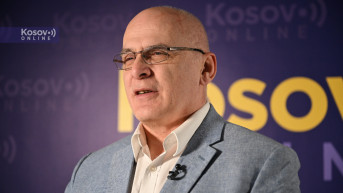
The Executive Director of the Council for Strategic Policies, Nikola Lunic, stated that Finnish President Alexander Stubb’s initiative to appoint a special envoy for Ukraine and create a peace plan modeled after Martti Ahtisaari’s 2007 proposal is not applicable and that Russia would not accept the concept of "controlled independence." At the same time, he emphasized that such a solution would require the presence of between 100,000 and 120,000 international peacekeeping troops, which is currently impossible to secure.
"The Finnish president is enhancing the legacy of a career Finnish diplomat like Ahtisaari. However, Ahtisaari’s plan was not so successful that we could speak of his crucial contribution to peace in the Western Balkans. We see that it has practically become a frozen conflict, with no further recognitions of Kosovo’s independence, and its international legal status remains entirely questionable," Lunic told Kosovo Online.
He points out that the 2007 Kosovo model "differs drastically from Ukraine."
"At that time, Serbia did not fully control its territory with its armed forces. International coalition forces were present in Kosovo and Metohija. On the other hand, Russia controls about 20% of Ukraine’s territory. Ahtisaari’s model of 'controlled independence' included autonomy for certain regions, constitutional guarantees for minority rights, and a robust international presence. If applied to Ukraine, it is quite clear that this would be unacceptable to Russia," Lunic explained.
Another reason, he notes, is that top officials of the new US administration have already "promised" Russia the possibility of annexing certain territories.
"It has been clearly stated that Ukraine cannot count on its pre-2014 borders," Lunic recalled.
He emphasizes that the key lies in providing security guarantees, which would require a significant international military presence – something that is currently difficult to achieve.
"Security guarantees would necessitate a robust military presence of international forces with heavy armored vehicles and artillery. At this moment, that is uncertain, as the US is entering negotiations with Russia while preemptively rejecting the possibility of involving its forces in such a hypothetical peacekeeping operation," the analyst pointed out.
At the same time, he clarifies, Europe is also unable to take full responsibility for such a mission.
"At present, Europe can provide up to 25,000 troops, while estimates suggest that such an operation would require between 100,000 and 120,000 soldiers," Lunic stressed.

0 comments