
Sachs: Serbia should be part of a wise Europe, which it is not today
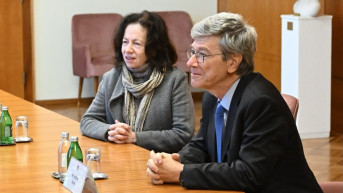
American economist Jeffrey D. Sachs said that Serbia should not rush to join the European Union, arguing that Brussels itself has shown no readiness for Serbia’s swift accession. He added that, together with countries holding similar views, Belgrade could help steer Europe away from what he described as the current wave of Russophobia and back toward the idea of inclusive European security based on the Helsinki Final Act and a renewed and reformed OSCE.
“Serbia is absolutely right to pursue a foreign policy that maintains relations with Europe, Russia and China alike, without having to choose sides. The point is that the European Union itself should also maintain relations with Russia and China rather than treating them as implacable enemies. Today’s Russophobia in Europe is entirely absurd, tragic and potentially self-destructive. Under ideal circumstances, Serbia should be part of a wise and rational Europe. However, in my view, Europe is not acting rationally enough today,” Sachs said in an interview with Politika, in which he discussed major changes in the global political and economic landscape and the transformation the modern world is undergoing.
Starting from the rise of Asia, the decline of U.S. hegemony and the emergence of a multipolar world, Professor Sachs explained why he believes humanity is experiencing a historic shift that will shape the political, economic and security architecture of the 21st century.
Will the Transformation Be Peaceful?
At the deepest level, the change represents an evolution—a gradual, long-term return of Asia to the center of the global economy, a process that has been unfolding for decades and is driven by demographic and technological change. At the level of the international system, this evolution amounts to a profound transformation: a transition from the brief unipolar period of U.S. dominance following 1991 back to a multipolar world.
Whether this transformation remains peaceful or turns into a violent upheaval in the form of a great-power war is the most important unanswered question of our time. The answer depends primarily on whether the United States is prepared to accept a reality it has not yet accepted. Let me begin with two fundamental facts that determine everything else.
The first is that the multipolar world has already arrived. This is primarily the result of China's rise, but more broadly of Asia's emergence as the new center of the global economy and population. Measured by purchasing power parity, China's economy is already larger than that of the United States. Asia now accounts for roughly half of global output and is home to more than half of humanity. This is not a historical anomaly but a return to the historical norm. Throughout most of recorded history, China and India were the world's largest economies. Western dominance over the past two centuries—and particularly U.S. dominance after 1945—represented a temporary historical period made possible by the fact that the countries of the North Atlantic were the first to master the technologies of the Industrial Revolution. That technological monopoly has now ended. Asia has mastered the same industrial and, today, digital technologies, causing the old hierarchy to rapidly unravel before our eyes.
How Are the United States Responding?
The United States has not accepted this new reality. Instead of adapting to a world with several major powers, Washington continues to act as though it is—or should remain—the sole superpower, an indispensable nation entitled to set the rules for everyone else. This refusal to accept reality is, in my view, the underlying cause of most of today's international tensions and wars.
Over the long term, the global distribution of power follows the distribution of economic strength, while economic strength is rooted in population and productivity. When one region enjoys a decisive technological advantage, it acquires the capacity for military and political dominance, as Western Europe once did, followed later by the United States.
What Happens to the Unipolar Order?
As technology spreads, economic power equalizes, followed by political and military power. A unipolar order can survive only as long as a technological gap exists. Once other powers—above all China, but also India and others—close that gap, unipolarity becomes unsustainable. No level of military spending or diplomatic pressure can alter the basic mathematics of population, technology and productivity.
That is why I believe the American project of preserving permanent hegemony is doomed to fail. It runs counter to the deep structural logic of our era and is also based on arrogance and injustice.
What Lessons Can History Teach Us?
The rise and fall of great powers have always followed the geography of technology and trade. The regions leading in the development of the key technologies of their time shaped the course of history. For the past two centuries, that was the North Atlantic. Today, it is once again becoming Eurasia and the Pacific region.
What Role Do Today's Major Leaders Play?
President Xi Jinping represents a China primarily focused on its own economic development, technological progress and national rejuvenation. China seeks stability and security in its immediate neighborhood and a place in the world commensurate with its size and importance. In my opinion, however, it does not seek global military hegemony in the way the United States has done. Its principal instruments of influence are not military interventions but trade, investment and infrastructure projects, such as the Belt and Road Initiative.
And Russian President Vladimir Putin?
President Vladimir Putin represents a Russia determined to protect what it considers its vital security interests, particularly regarding NATO enlargement. The tragedy of Ukraine is, to a large extent, also the consequence of the West's refusal to take Russia's security concerns seriously and to negotiate in good faith.
And U.S. President Donald Trump?
President Donald Trump represents a more complex case. He embodies American unilateralism in its most transactional form—through tariffs, political pressure, deal-making and open distrust of allies and international institutions. To some extent, he understands that the old international order is ending and speaks about ending "endless wars." At the same time, however, he has intensified coercive policies through trade wars and sanctions, thereby paradoxically accelerating the search by the rest of the world for alternatives to American dominance.
In essence, I believe Trump operates without a clear long-term strategy, is deeply burdened by corruption and, for that reason, remains politically insufficiently effective.
How Much Power Do These Leaders Really Have?
None of these leaders, however powerful, can reverse the deep structural processes I have described.
This brings me to Europe, whose position I view with genuine concern and some surprise. It has subordinated its foreign policy to Washington, abandoned Russian energy supplies at enormous cost to its own industry, joined the confrontation with China against its own economic interests and embarked on an extremely expensive rearmament effort.
All of this has happened despite the fact that a significant portion of the European public does not support such policies and despite the fact that they do not serve Europe's long-term interests and prosperity.
Geographically and economically, Europe belongs to the Eurasian landmass. Its natural future lies in peaceful integration with Russia, China, the Middle East and Africa—not in serving as the western military flank of a power whose global dominance is gradually declining.
A Europe that regained its strategic autonomy could become one of the key pillars of a stable multipolar world and a strong voice for peace. Whether it will find political leadership capable of achieving this is something I cannot assess at present.
The transition toward a multipolar world is inevitable. It is rooted in economic and demographic trends that no government policy can halt or reverse. At the same time, this change represents a deeper form of historical justice—a world in which every region has the opportunity to prosper and participate in decision-making, rather than only the countries of the North Atlantic.
What Is the Greatest Danger Today?
The real question is not whether this transformation will occur, but whether we will manage it peacefully or allow it to descend into catastrophe.
The greatest danger is the escalation of conflicts among major powers—in Ukraine, over Taiwan or in the Middle East—any of which could develop into a direct confrontation between nuclear-armed states.
What makes this danger especially serious is the fact that powerful interests derive enormous benefits from such conflicts. The military-industrial complex, both in the United States and in Europe, is extremely influential and promotes policies of confrontation, even though public opinion surveys consistently show that most citizens do not support such policies.
Therefore, the task of our time is not to prevent Asia's rise. That is neither possible nor desirable. The real task is to embrace that rise peacefully within a reformed system of international law and international cooperation, with the United Nations serving as its central pillar.
Are the United Nations Losing Influence?
The fundamental message behind the founding of the United Nations in 1945 was that the world should not be based on the permanent dominance of a single power but on cooperation among sovereign states acting according to common rules.
Incidentally, I also believe this will be a period in which Africa will play an increasingly important and constructive role in the global economy.
Unfortunately, we have largely drifted away from the ideals enshrined in the UN Charter. Returning to those principles, while preserving peace among the great powers at a time when the world is finding a new balance, is the great task of our generation.
Ultimately, the choice is ours. The essential dilemma is between the wisdom of adapting to new realities and the illusion that the United States can preserve through force a hegemony that no longer exists.
The world is entering a new historical era in which no single country will be able to determine the rules of the international order on its own. That is precisely why the future should be built on dialogue, mutual respect and the consistent application of international law. Only in this way can the transformation that has already begun remain a peaceful evolution of the international system rather than turning into a great-power conflict.

0 comments