
Mijacic: Tomorrow's meeting in Brussels will be a turning point; whether it will lead to a calming of tensions or further escalation
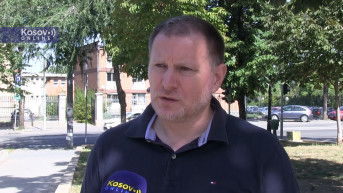
The upcoming round of high-level dialogue in Brussels is one of the most important in this phase of the dialogue, and after that meeting, it will be clear whether the relationship between Belgrade and Pristina will move towards further normalization in the coming period or whether things will escalate, especially in the north, Dragisa Mijacic, coordinator of the National Convention on the EU for chapter 35, says for Kosovo Online.
Mijacic indicates that there are numerous topics for discussion between Serbian President Aleksandar Vucic and Kosovo Prime Minister Albin Kurti and European mediators - from the withdrawal of the Kosovo Police from and around municipal buildings in the north, new local elections, through the formation of the Community of Serb-majority Municipalities, to energy and the issue of the missing persons.
"The meeting between Vucic and Kurti, which is expected tomorrow, is one of the most important meetings in this phase of the dialogue - it comes after the summer break and all the unpleasant events that we saw in May, but also before that. After this meeting, it will be clear whether, in the coming period, things will move towards further normalization of relations or whether things will escalate, especially in the north of Kosovo. There are many open topics for discussion, things that need to be resolved urgently and that is, first of all, the presence of the Kosovo Police forces in administrative facilities, but also in the north of Kosovo,” Mijacic said.
He notes that there is also the issue of organizing new local elections, but also other topics, such as energy, as a forgotten topic that needs to be resolved before winter, and the issue of missing persons.
"There are many topics and a lot will depend on this meeting," Mijacic believes.
When asked whether there could be progress, given that the Prime Minister of Kosovo was not only taking steps that led to escalation, but also proposing to impose sanctions on Serbia in the form of stopping investments and canceling visa liberalization, and persistently refused to form the Community of Serb-majority Municipalities, Mijacic emphasized that it did not depend on Kurti whether any punitive measures would be introduced to Serbia.
"It does not depend on Kurti whether the EU will impose sanctions on Serbia or not, but it certainly depends on whether the EU will lift the sanctions against Kosovo. What should be the focus of the Government in Pristina is exactly that, fulfilling the three-point plan in order to normalize the situation in the north, organize new elections, and begin the formation of the CSM, and these are all conditions for the lifting of sanctions on Kosovo," Mijacic emphasizes.
Kosovo, in its appeals for the abolition of the measures introduced by Brussels, refers to the agreement in Bratislava between the Deputy Prime Minister of Kosovo, Besnik Bislimi, and the EU Special Envoy for Dialogue, Miroslav Lajcak, on steps towards de-escalation, while "forgetting" the implementation of the EU's demands from June 3.
Mijacic clarifies that what was achieved at those talks in Bratislava is not a mistake, but he also points out that it is not an agreement, but rather an "agreement and a bilateral promise of Kosovo" that during the summer months, the presence of the police in the north of Kosovo would be reduced.
"That does not mean much in the European and dialogue frameworks; it is clear what is required of Kosovo - the withdrawal of police forces from administrative facilities, de-escalation in the north, and the organization of new elections. The Bratislava Agreement is one type of mechanism by which Kurti wanted to appease the domestic public during the summer. The summer has passed, so that agreement has no significance," Mijacic pointed out.
He assesses that Brussels is the main address for the issue of relations between Belgrade and Pristina and that he does not expect that the Kosovo issue will be raised in another institution, such as the UN General Assembly.
He emphasizes that the EU is there to conduct dialogue, which it does, and conducts it, he assesses, according to the principle of "still waters run deep", which does not imply radical and immediate measures to lead Kurti or any party to an agreement. However, he warns, that due to "disobedience" and lack of agreement, the entire region may have consequences.
That is why, says Mijacic, it is important for the parties to evaluate what they want - peaceful coexistence or solving problems with weapons.
"The key question here is, do we want peace and prosperity in this area, peaceful coexistence, and normal life, or do we want to solve this issue with the power of arms? And we know that in the past no one succeeded, because problems were not solved with arms in these areas. So I don't think that will happen now either. The European Union is there to present that process, but politicians from one side and the other must know what they want to get out of all this," Mijacic concluded.

0 comments