
Miladinovic: Serbia is preparing for peace; we need the military to prevent war
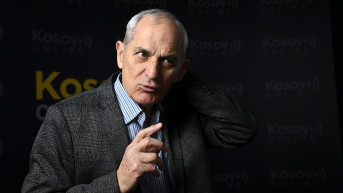
Milomir Miladinovic, President of the Assembly of the Club of Generals and Admirals of Serbia, assesses that Serbia, by announcing the reintroduction of mandatory military service, is not preparing for war and that the number of members in the Serbian Armed Forces is lower than the one agreed upon in the Vienna Agreement of 1996. Simultaneously, this retired general believes that the announcements regarding the formation of a "European army" are unrealistic.
"Serbia is preparing for peace. The military is not a guarantee and a factor for war but rather a factor for peace. We need the military to prevent war and, at the same time, to be a guarantee of Serbia's capability as a deterrent factor. That is the essence of the military", Miladinovic emphasizes, adding that peace is necessary not only for Serbia but for the entire world.
"Unfortunately, there are still those who invest enormous resources in the needs of the military, but these investments in the military of other countries are for conquest, i.e., warfare. We invest in the military to successfully deter the enemy and, if necessary, to defend ourselves", Miladinovic states explicitly.
According to his words, the General Staff of the Serbian Army had previously proposed the reintroduction of mandatory military service for what he describes as highly practical reasons - the lack of training in younger generations.
"For the 12 years during which mandatory military service was suspended, we practically lost 12 generations of young soldiers who could have been militarily trained. At the beginning of 1999, we had over two million people militarily fit in the military registry. Unfortunately, 12 years have passed, so many untrained young people, and at the same time, 12 generations have aged out of mandatory military service in the reserve. Today, we practically do not have soldiers, young ones under 30, who have completed military service", Miladinovic explains.
He says that Serbia is currently facing the fact that, on one hand, it possesses modern technology comparable to that in surrounding countries, but on the other hand, there will be a problem due to the lack of trained personnel to operate it.
"When we talk about the factors of war, there are human factors, technology, space, and time. We have these three factors, but not the first, the main one, which is the human factor. We need people to fill the units in peacetime and, at the same time, to have them for the war formation, i.e., for reserve service and the needs of mobilization", Miladinovic specifies.
He says that, according to the Vienna Convention signed by Serbia over two decades ago, it was assessed that its armed forces should not exceed one percent of the total population.
"Why shouldn't we have as many soldiers as we deem necessary to be security-safe", this retired general emphasizes.
He recalls that the number of soldiers and the amount of weaponry in the Balkan countries were defined by the Agreement on Subregional Arms Control signed in 1996 in Vienna.
Commenting on the announcement from the State Department that they are "closely monitoring" the events related to the Serbian Army, followed by NATO's assessment that the issue of reintroducing mandatory military service is an "internal matter of Serbia", General Miladinovic says that such comments are funny and represent a provocation and a form of pressure to abandon the proposal. However, he is confident that they will not influence the final decision of the state leadership to reintroduce mandatory military service.
He says that it is unserious for the State Department to issue a statement that they are "monitoring events in Serbia" while simultaneously taking no action regarding the respect for UN Security Council Resolution 1244.
"People should laugh at such statements. Many things have happened since 1999 and Resolution 1244 when Kosovo first did not have the right to independence, then they recognized that independence, then it did not have the right to long-gun weapons, and now they want to form armed forces. They did not monitor those developments, and now they want to monitor a regular state, Serbia, for which the military is one of the pillars, like in any other state. Why shouldn't Serbia have a military according to its own standards?" Miladinovic emphasizes.
He says it is additionally unserious because these statements come from a country that spends $50,000 on the military every second.
"The leading country in terms of arming is the United States, which spends $760 billion, and the next ten countries spend roughly the same. That is $50,000 every second. These are enormous funds, and if there were awareness among these great powers, the world would be completely different. Unfortunately, some theorists advocate for dividing the population in half, suggesting that half should disappear", Miladinovic specifies.
Commenting on the announcement by the French Prime Minister that the country would invest in armaments and equipment in the coming period, Miladinovic says that it is not surprising because NATO prescribes a certain "quota" to its members, but each of them can purchase weapons and strengthen their forces beyond that, depending on their budget.
"I once talked to the Chief of the General Staff of the Armed Forces of Romania, and he told me, 'We are obliged to NATO to have a certain amount of forces and resources, and if we have resources beyond that, we can have a million-strong army for our needs'. Just like the Americans have regular armed forces and territorial defense, i.e., the armed forces of their states", Miladinovic specifies.


0 comments