
Milasinovic: Attempts to portray Serbian cultural heritage as Albanian are a deliberate form of cultural expropriation
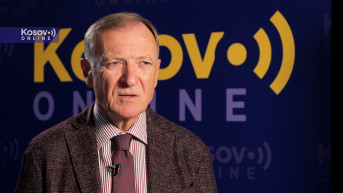
The President of Serbia’s National Commission for Cooperation with UNESCO, Professor Goran Milasinovic, stated that Serbia’s annual report to UNESCO on World Heritage Sites will include the recent case of Serbian churches being labeled as Albanian on Google Maps in the Albanian language—a phenomenon he describes as a deliberate act of cultural expropriation aimed at transforming Serbian cultural heritage into Albanian.
In an interview with Kosovo Online, Milasinovic explained that UNESCO cannot directly control Google Maps, but it is Serbia’s duty to inform UNESCO officials about such deeply troubling incidents, especially since these sites are not only on the World Heritage List but also on the List of World Heritage in Danger.
“Minister Selakovic, in his letter to Ms. Audrey Azoulay, also referred to these insidious attempts to portray our cultural artifacts as Albanian—a process that has been going on for years,” he said.
He recalled that when Serbian medieval monasteries in Kosovo and Metohija were inscribed on UNESCO’s list in 2004 and 2006, a manipulative change occurred in the final designation—from “Serbian Medieval Monasteries in Kosovo and Metohija” (as it appeared in the nomination documents) to “Medieval Monasteries in Kosovo.”
“That was a tendentious move by countries seeking to help Kosovo achieve full independence—even symbolically—and eventually apply for full UNESCO membership, which it tried to do in 2015. We managed, with great effort, to amend the text so that within the description (though not in the title), it was stated clearly that these are Serbian monasteries in Kosovo,” Milasinovic said, adding that this was not about disputing facts, which are clear, but rather about perfidious manipulation and a form of hybrid warfare that exploits even the smallest openings.
He described the labeling of Serbian holy sites as Albanian on Google Maps as just one in a series of ongoing pressures.
“At first glance, it might seem like a form of cultural expropriation—someone might say, ‘Well, it’s just a mistake.’ But we know it’s intentional. We know there’s politics behind it. It’s part of a broader effort to create an atmosphere in which Serbian traces no longer exist—and if Serbian traces are erased, that implies the Serbian people no longer exist in Kosovo, making Kosovo’s independence appear absolute and unquestionable,” the UNESCO Commission president emphasized.
Milasinovic stressed that Serbia must remain vigilant and alert, never allowing its attention to wane.
“I believe we’ve been doing that, especially in 2015. We managed to convince a large number of friendly and neutral states—those with a rational understanding of the issue—that this is a continuous desecration of cultural assets that belong to the world because they are on the UNESCO list, but that are also living churches, not museum relics. Therefore, this also threatens the people themselves. The fact that UNESCO has consistently refused to remove these monuments from the List of World Heritage in Danger, despite initiatives from Pristina, proves that UNESCO fully understands what is really happening in Kosovo,” Milasinovic said confidently.
He explained that each year, during the session of the UNESCO World Heritage Committee, Serbia submits a written report on the condition of its medieval monasteries in Kosovo and Metohija. According to him, all members of UNESCO’s Executive Board are well informed, and this information is then circulated to other member states.
“Our vigilance must remain constant—that means continuously alerting the international public and cooperating closely with friendly countries,” concluded Milasinovic.


0 comments