
Mitic: A conviction of Thaci would be a problem for Tirana
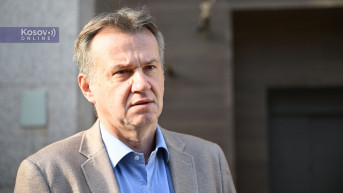
The protest held in Tirana in support of former KLA leaders currently detained in The Hague, which was endorsed by Albanian Prime Minister Edi Rama, should be viewed from several angles, Aleksandar Mitic says, senior research fellow at the Institute of International Politics and Economics in Belgrade. One of those angles, he notes, is whether a potential conviction of Hashim Thaci would negatively impact Albania’s prospects for European Union membership.
“If Hashim Thaci, by some miracle, ends up being convicted, given the experience we have with judicial institutions established primarily by the West, it would create a problem for Tirana, since Albania is currently considered one of the so-called flag bearers of the EU enlargement process. If he is convicted, the question is to what extent Albania’s role in creating, preparing, training, arming, and directly supporting the KLA’s aggression against the Federal Republic of Yugoslavia could have a direct negative impact on Albania’s EU membership prospects,” Mitic told Kosovo Online.
If Thaci is acquitted, he adds, Rama’s support for the protest can be seen as a move to rebuild ties with Thaci, which have existed between the two for years.
“Thaci’s party achieved quite a solid result in the local elections, and in a way, an acquittal would further contribute to rebuilding that relationship,” Mitic said.
On the other hand, Rama’s support for the former KLA leaders may also be part of a struggle for dominance over who is the leading figure of the “Greater Albanian” political idea, Rama or Albin Kurti, Mitic believes.
Rama, he notes, has not always been publicly associated with that idea, although his actions clearly show that he has long advocated for it behind the scenes, unlike Kurti, who has been much more open about it.
“It is clear that Rama sees Kurti as weakened at the moment, despite the fact that he received the mandate to try to form a government. The question is whether he will succeed in building a majority. At the same time, Kurti’s local election results were not very good, and he is facing pressure from the United States, even if not a strong one. But the fact remains that he is relatively weakened, and this might be an opportunity for Rama to present himself, both to his more hardline voters in Albania and to the broader Albanian population in Kosovo and Metohija, as well as in North Macedonia, as the true standard-bearer of the Greater Albanian idea,” Mitic emphasized.
When it comes to Self-Determination’s stance toward the KLA, Mitic reminds that Albin Kurti was a political protégé of Adem Demaci, the political leader of the KLA, and that many supporters of Self-Determination are almost certainly former KLA members.
“They are clearly addressing that audience. Kurti doesn’t want to lose his primacy. He sees himself as the one who has made concrete steps toward what he considers a centralized, unified, and sovereign Kosovo. He also believes that, by having received the green light from the West, from countries such as Germany and the United Kingdom, to do what he has been doing in recent years, namely carrying out ethnic cleansing and effectively seizing Serbian institutions, he deserves all the glory for these ‘successes,’ from his point of view. And he doesn’t want anyone, not Thaci, who’s been out of politics for several years, nor Rama, with whom he has had many disagreements, to steal that from him,” Mitic concluded.


0 comments