
Mitic: Indonesia has faced decades of separatist movements—It is understandable that it does not recognize Kosovo
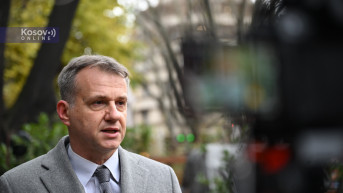
Senior Research Associate at the Institute of International Politics and Economics in Belgrade, Aleksandar Mitic, stated that Indonesia stands firmly by its position that Kosovo is an integral part of the Republic of Serbia—both on the basis of defending international law and on the basis of preserving its own territorial integrity, as the country has faced serious separatist movements for decades.
Commenting on Albanian President Bajram Begaj’s lobbying—Begaj last week urged Jakarta to reconsider its stance and recognize Kosovo—Mitic told Kosovo Online that this is nothing new, and that since 2008, every Albanian president, including the current one, has made the same request whenever meeting with Indonesian officials: reconsider your view that Kosovo is part of Serbia.
“It is completely normal for Tirana, which lobbies for the unilateral declaration of Kosovo’s independence as part of its ‘Greater Albania’ policy, to lobby Indonesia—the world’s largest Muslim-majority country and the fourth most populous nation. Indonesia, however, has not changed its position since 2008, despite the fact that neighboring Malaysia—also a majority-Muslim country—recognized Kosovo almost immediately. Later, in the mid-2010s, several ASEAN countries, such as Brunei, also a neighbor of Indonesia, and Thailand, recognized Kosovo’s unilateral declaration of independence. Nevertheless, Indonesia has remained firmly committed to its position,” Mitic notes.
He points out that Indonesia has, for decades, grappled with serious separatist movements, and that in 2005 a peace agreement concerning the province of Aceh was reached, which has since remained stable and conflict-free.
“Aceh was granted substantial autonomy—the very solution we offered for Kosovo and Metohija. In Indonesia’s case, this was accepted, and peace has prevailed since then. But there is always a concern that a separatist movement could someday re-emerge, especially if encouraged from outside. Therefore Jakarta’s stance is understandable—just as it is understandable that, for Serbia, it is extremely important that Jakarta maintains this position,” he emphasizes.
Indonesia’s stance matters not only because of the country’s size, he adds, but also because Indonesia became a BRICS member earlier this year, pursues a “hedging” foreign-policy strategy, and pays close attention to China’s position.
Although he says he recently visited Indonesia and spoke with Indonesian officials—who made it very clear that recognition of Kosovo is out of the question—Mitic warns that one should not forget the very intense lobbying efforts from Ankara and Tirana in recent years, as well as the negative role played by Riyadh, given that Syria recognized Kosovo in October.
“The pressure campaign on Belgrade is extremely serious. What is worrying is the very active involvement not only of Tirana, which has always been relentless in this, but also, to some extent, Ankara and even Riyadh. And considering that Indonesia is a member of the Organization of Islamic Cooperation, that makes the situation particularly dangerous,” Mitic cautions.
For that reason, he says, regardless of Jakarta’s official positions, Serbian diplomacy must be extremely vigilant to ensure that the lobbyists advocating recognition of Kosovo’s independence do not succeed and inflict yet another serious blow.




0 comments