
Mitic: It is possible that Prague will not agree with all of Pristina’s demands in the coming period
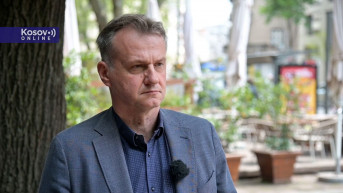
Senior research associate at the Institute of International Politics and Economics in Belgrade Aleksandar Mitic says that although it cannot be expected at this moment that the Czech Republic will withdraw its recognition of Kosovo’s unilaterally declared independence, it is possible that in the coming period Prague may not agree with all of Pristina’s requests when it seeks to join new international organizations, nor with other recognizing countries within the European Union.
Mitic told Kosovo Online that the position on the Czech recognition of Kosovo expressed last week by the country’s Foreign Minister Petr Macinka is extremely important for Serbia and represents a very important indicator of how the current Czech government views this issue.
“We know that, unfortunately, under strong pressure from the United States and, unfortunately, under manipulation by then foreign minister Karel Schwarzenberg, the Czech government was practically forced to recognize the so-called declaration of Kosovo’s independence in 2008 against its will and against the will of the majority. Since then, the Czech political scene has had very clear and strong voices opposing a move that is completely contrary to international law,” Mitic stated.
He recalled that this was also opposed by then Czech president Vaclav Klaus, as well as Milos Zeman, who succeeded him and described what happened as a disgrace for the Czech Republic.
“Zeman inherited from Klaus a policy of effectively not opening a Czech embassy in Pristina. Unfortunately, this was followed by a rather destructive policy after the formation of the previous government, which fully aligned itself with something that is an absolute violation of international law and established full relations with Pristina. However, with this new government of Andrej Babis, we have a coalition in which at least two partners are extremely critical of the so-called unilateral declaration of independence, and we have Prime Minister Babis, who has always been quite pragmatic. He is someone who may not have challenged the so-called unilateral declaration, but at the same time is not someone who has pushed in the direction of recognition and Kosovo’s membership in international organizations,” Mitic explained.
However, he adds that it cannot be expected at this time that the Czech Republic will withdraw recognition of Kosovo’s unilaterally declared independence, although he notes that there has been debate on this issue, especially during Zeman’s tenure.
“On the other hand, in the coming period we will see a series of attempts by Pristina to join new international organizations in one way or another, and in that regard it is possible to expect Prague to take positions that may not be those of absolute non-recognizers such as Slovakia or Romania, but that it may repeat what Hungary did during the time of Viktor Orbán, that is, not to agree with all of Pristina’s demands and with other recognizing countries within the European Union. This leaves more room for maneuver for Czech diplomacy and more room for cooperation with our diplomacy. In any case, this is an extremely positive development,” Mitic emphasized.
He believes that such a position by the Czech government could have an impact within the EU, as the Czech Republic is a very important country both within the European Union and within the Visegrad Group, which also includes Slovakia, an absolute non-recognizer of Kosovo. The Czech Republic, he adds, is trying to maintain the best possible relations with both Bratislava and Budapest.
“We know that in practically none of the four countries of the Visegrad Group is there any particular enthusiasm regarding the so-called unilateral declaration of Kosovo’s independence. The parties that make up the ruling coalition in the Czech Republic, at the European level, within the European Parliament, through the European groups they belong to, can significantly influence those groups and contribute to spreading such a position, both in the European Parliament and more broadly within the political context of EU member states, that the Kosovo issue is ultimately an issue of the Republic of Serbia, a regional issue, as emphasized by the Czech foreign minister. This is truly something more than mere rhetoric, and I expect it to have practical repercussions in the future,” Mitic concluded.

0 comments