
Mojsilovic: There was no indication that something would happen prior to September 24
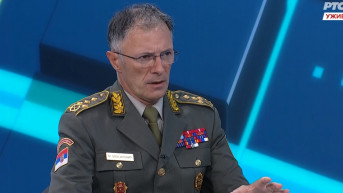
The Chief of the General Staff of the Serbian Armed Forces, General Milan Mojsilovic, stated last night that there had been no information prior to September 24 and the events in Banjska that would have indicated that something major was going to happen.
"I cannot speak about September 23 because intelligence and security information about the event began to arrive on September 24, early in the morning. However, I can say with certainty that there were no indicators showing that something major, complicated, or complex would happen. The situation was normal, according to the report and what we could monitor," Mojsilovic said to RTS when asked about the information regarding the events in Banjska.
Mojsilovic said that information related to the event began arriving on September 24 in the morning through the duty operational team, and initially, it was not comprehensive, detailed, or precise.
"We relied on our intelligence and security capacity resources, on what we could see and hear from our positions. I had contact, I talked to the KFOR commander about it, and we began receiving information from them from the field," the Chief of the General Staff explained.
He added that it was not the first time that a crisis had been triggered by Pristina's unilateral and "crazy" moves.
"At 8 o'clock, I already had a meeting, myself and my associates, the Minister of Defense, and agency directors; we informed the Supreme Commander about what we knew – about events on the ground, that there were injuries, and so on. After that, measures followed, which I activated immediately," Mojsilovic said.
He emphasized that on September 24, he had received the task of fully controlling the Ground Safety Zone and securing the administrative line through the preventive deployment of units of the Serbian Army.
When asked if this was something unusual, he replied in the negative.
"This is not an unusual order; it is in line with the events on the ground because we anticipated that the crisis could escalate, especially because there was the use of firearms on part of the Kosovo and Metohija territory," General Mojsilovic noted.
He added that crises had started with full intensity since August of last year, and as they had grown, each time there had been more Serbian Armed Forces troops in the context of preventive deployment of Serbian Army units.
He stressed that at that moment, there had not been the largest number of Serbian Armed Forces troops on the ground.
"Even 'de facto', this was not full combat readiness, which would mean that all members merged with technology, weapons, and ammunition and waited for further tasks in line with the plans of the Serbian Armed Forces. Here, the number was half less; there was no increase in the numerical strength or full combat readiness of the Serbian Armed Forces," General Mojsilovic emphasized.
Regarding the new KFOR commander, Turkish General Ozkan Ulutas, who will soon take up that position, Mojsilovic noted that he would be the 28th commander of that NATO mission and added that he expected a meeting after he assumed his duties.
"I have always offered them a solution, from Belgrade's perspective; if the security institutions or players in the field, which we do not recognize as such in line with all agreements with KFOR – Kosovo Police and KSF – are not put under control, these problems and crises will continue," the Chief of the General Staff warned.
He added that he expected a meeting with the commander of the joint NATO forces in Belgrade after the handover of the KFOR commander's duties and that he would present Serbia's views on further work.
Defense Minister Milos Vucevic said that the visit of the Turkish Minister of Defense to Serbia had been confirmed, which, as he said, was important for clarifying all the facts, primarily regarding the arming of Pristina.

0 comments