
Moore: Kurti and the opposition in Kosovo do not seem to be doing a good job
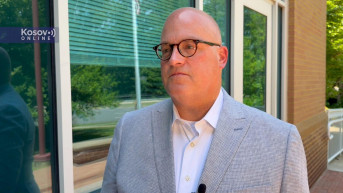
Former US ambassador and longtime diplomat Jonathan Moore said that neither Kosovo Prime Minister Albin Kurti nor the opposition in Kosovo is doing a particularly good job when it comes to achieving results through mutual cooperation.
Speaking to RTS, Moore said he was following the situation in the region and that what is happening in Kosovo is the result of a very complex legislative framework, but also of the personalities of the political actors.
“But whether it is Albin Kurti or people from the political opposition in Kosovo, it does not seem that they are doing a particularly good job when it comes to achieving results through mutual cooperation. The consequence is a lack of progress, including in the dialogue with Belgrade,” Moore pointed out.
He expressed hope that the situation would change very soon, but also acknowledged that he was not optimistic that this would happen.
Career diplomat Zoran Milivojevic stressed that there are no conditions for the dialogue to continue.
“You have no one to talk to, nor anything to talk about. There are no indications that Pristina is ready to meet the conditions set earlier. And the condition of all conditions for substantive dialogue is the Community of Serb Municipalities. Everything else is just a postponement of the possibility of seeking a political solution,” Milivojevic told RTS.
Brussels, he noted, is also being put to the test – as a signatory to the agreement.
“I am discouraged by what I heard from Ursula von der Leyen in Pristina, that Kosovo is a state. This reduces the possibility of constructive dialogue in the future,” Milivojevic said.
Speaking about the intention to amend the Law on the Specialist Chambers, he explained that this would make it possible for Hashim Thaci to be released after the appeals process.
“The amendments give the Supreme Court jurisdiction to influence the final decision of the Specialist Chambers, reduce the sentence to 15 years, including time spent in detention, and give the president the possibility of granting an amnesty... The essence is that the DPK wants to create the conditions for Thaci to be released. He is a rival to Kurti, and now we have a struggle for power,” the diplomat said.
Should such amendments be adopted, he noted, all efforts toward progress would be called into question.
“That would mean completely eliminating the possibility of speaking about punishing criminals, about justice, and bringing war crimes to justice. In practice, it would be a concession to the policy advocated by radical elements in Pristina – that there were no war crimes at all. That the burden of responsibility be shifted onto Serbia. That is the essence. If the amendments to the law are adopted, it would mean a complete amnesty for the Albanian factor and create an environment in which there is no justice, while reconciliation would be made impossible. It would create the possibility of a new pogrom against Serbs,” Milivojevic warned.
He also said that the Pristina side was actively pursuing a process aimed at bringing Serbia to the table as the guilty party, as well as using the Croatian formula.
He also noted that, for now, there has still been no reaction from the international community and that the practice of tolerating the policy being pursued in Pristina continues.
“There may be some reactions along the lines of verbal calls for de-escalation and appeals for political dialogue, but I do not see any possibility that they would call such a policy into question. That is tolerance of the authorities in Pristina and an attempt to affirm Kosovo's legality,” Milivojevic added.



0 comments